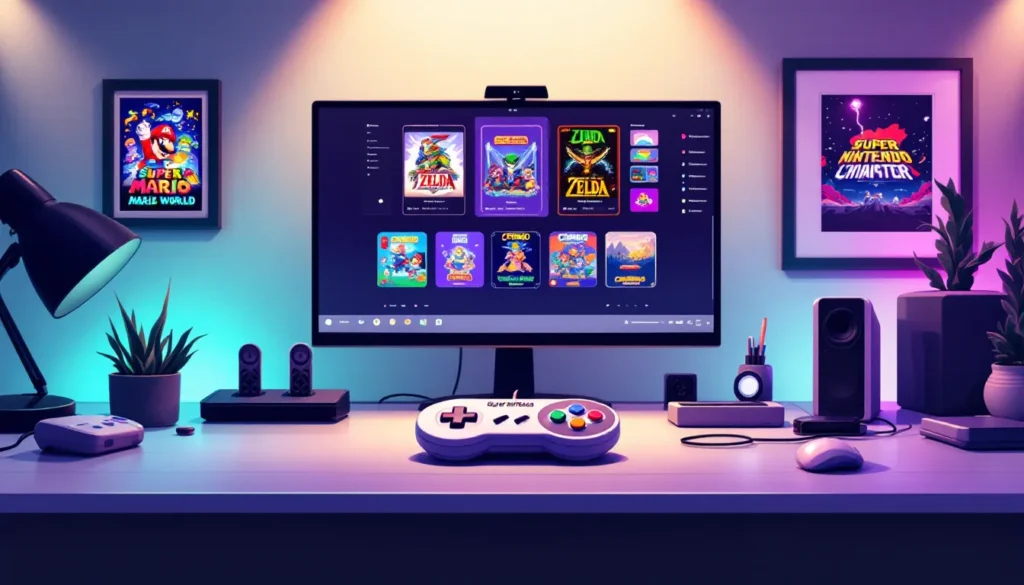
The Super Nintendo Entertainment System (SNES) launched in 1990 and instantly became the gold standard for 16-bit gaming. Nearly four decades later, SNES classic games remain the yardstick against which every platformer, RPG, and action game is measured. It’s not nostalgia talking, it’s the sheer quality of game design, sprite art, and soundtrack composition that keeps players returning to these classics. Whether you’re discovering these titles for the first time or revisiting childhood favorites, the SNES library offers something that modern gaming often overlooks: focused, intentional design where every mechanic serves the experience. Let’s jump into the SNES classic games list and explore why these 25 titles still deserve a permanent spot in your collection.
Key Takeaways
- SNES classic games revolutionized 16-bit gaming through constraint-driven creativity, establishing design principles that remain industry standards decades later.
- Iconic SNES classic games like Super Metroid, Chrono Trigger, and Super Mario World achieved masterpiece status by perfecting single core mechanics rather than bloating gameplay with unnecessary features.
- Multiple ways to experience SNES classic games exist today, including the official Nintendo Switch Online service, emulation software, authentic cartridges, and affordable repro options for collectors.
- SNES games prioritized clear level design, artistic vision, and mechanical depth over technical specifications, proving that great game design transcends hardware limitations.
- The SNES library produced entire enduring franchises—Mario Kart, F-Zero, Mega Man X—from proof-of-concept titles that demonstrated unlimited creative potential.
The Golden Era of SNES Gaming
The SNES defined an entire generation of gaming. Released in Japan as the Super Famicom in 1990 and North America in 1991, it took the 16-bit leap that Sega Genesis offered and refined it with superior audio hardware and a legendary library. From 1990 to 1996, publishers large and small poured incredible titles onto the platform, knowing they had an audience that appreciated both technical prowess and artistic vision.
What made the SNES era so special wasn’t just raw power, it was restraint. Developers understood the console’s limitations and designed around them. They created tight, responsive controls because they couldn’t hide behind cinematic sequences. They wrote story beats that hit hard because they had limited dialogue. This constraint-driven creativity is why SNES games age so gracefully compared to many of their contemporary competitors.
The games that emerged from this era established franchises we still play today. Mario found his true home. Final Fantasy reinvented itself. Mega Man pushed the action genre into new territory. These weren’t experimental passion projects: they were confident statements that gameplay and art direction mattered more than technical specifications. That philosophy is exactly why Super Nintendo Classic Games: remains relevant to collectors and newcomers alike in 2026.
Action And Adventure Classics You Can’t Miss
Action and adventure games were where the SNES truly flexed its creative muscles. These titles prioritized responsive controls, level design that taught through play, and boss encounters that demanded mastery rather than luck.
Super Metroid: Revolutionizing The Genre
Super Metroid (1994) didn’t just define the action-adventure genre, it created the entire “Metroidvania” archetype that still influences game design today. The game opens with Samus locked into the basic beam cannon, and every weapon upgrade fundamentally changes how you navigate the world. Sequence-breaking was possible, the map felt organic even though being hand-crafted, and the sense of isolation on Zebes remains unmatched. The control feels precise even by modern standards: Samus responds immediately to input, and the grapple beam mechanic introduced a layer of mobility that made exploration genuinely exciting. Running through a door at the three-minute mark to escape the self-destructing station still delivers an adrenaline spike. This game sits alongside the best platformers ever created.
Castlevania IV: Mastering The Whip Mechanics
Castlevania IV (1990) took the whip mechanic that Castlevania established and evolved it into something beautiful. Simon Belmont could swing his whip in eight directions, up and down stairs, and even use it to grapple across gaps. That fluid, dynamic control made the game feel responsive in a way that few SNES action games achieved. The level design forces you to learn this mechanic progressively, introducing obstacles that demand specific whip angles or timing. Boss encounters are demanding without feeling cheap, and the atmosphere, bolstered by Konami’s legendary soundtrack work, establishes Dracula’s castle as genuinely foreboding. The graphics showcase the SNES hardware with parallax scrolling and detailed sprite work that still impresses decades later.
Mega Man X: Speed And Precision Perfected
Mega Man X (1993) took the formula Capcom perfected across the NES and accelerated it literally and figuratively. X moves faster, dashes, and clings to walls, immediately distinguishing it from the original Mega Man series. Boss variety is exceptional, each of the eight initial bosses feels mechanically distinct and rewards learning their patterns. The weapon system is balanced so well that multiple boss orders are viable, and high-speed runners still discover new shortcuts. The music hits every beat with Japanese arcade excellence. X’s upgrade system (armor pieces, health boosts, rush bike) gives long-time Mega Man fans meaningful progression beyond just “beating stages.”
Role-Playing Game Masterpieces
The SNES RPG library is genuinely stacked. Final Fantasy, Dragon Quest, and countless others made the system the go-to platform for J-RPGs during the mid-90s. These games combined tight storytelling, complex battle systems, and character growth arcs that players still discuss today.
Final Fantasy III: An Epic Journey Across Worlds
Final Fantasy III (called Final Fantasy VI in Japan, 1994) is a contender for best SNES RPG and arguably best RPG ever made. The story spans two worlds, features 14 playable characters with distinct abilities, and doesn’t follow the typical “hero’s journey” structure. Instead, it’s about a ragtag ensemble resisting an empire. The World of Ruin, where the villain actually wins halfway through, fundamentally shifts tone and stakes. Kefka stands as one of gaming’s genuinely terrifying antagonists, and the final dungeon escalation remains epic even by modern standards. Uematsu’s soundtrack is perfect, and the combination of character-driven storytelling with real mechanical depth makes replay value exceptional. This game should be on every SNES collection.
Chrono Trigger: Time-Traveling Excellence
Chrono Trigger (1995) demonstrates what happens when you combine a legendary developer roster (Hironobu Sakaguchi, Kazushige Nojima, Akira Toriyama) with unlimited ambition. The narrative structure enables multiple endings based on when you defeat the final boss and what sidequests you’ve completed. The time-travel plot doesn’t feel tacked on, it’s integral to exploring how characters affect history. The combat system introduces a cooldown-based turn order rather than simple ATB, forcing strategic positioning. Characters have combo attacks that hit like a perfectly orchestrated anime moment. The soundtrack spans multiple time periods and nails the emotional tone at every beat. RPG Site reviews like Chrono Trigger demonstrate why this remains the standard against which time-travel narratives are measured.
Earthbound: Quirky Charm Meets Deep Storytelling
EarthBound (1995) is aggressively weird in the most charming way possible. Ness and his party are contemporary kids with baseball bats and yo-yos fighting cosmic horrors and using PSI (psychic) powers. The story spans the United States, features surprisingly mature themes about identity and inevitability, and wraps everything in a comedy wrapper that makes it all digestible. The writing is sharp, NPC dialogue is genuinely funny without feeling forced. Boss encounters are visually bizarre and mechanically distinct. The game’s anti-violence message (Ness defeats Giygas through prayer rather than force) still hits hard. This game was a commercial failure in the US that’s since found its deserved audience.
Sports And Racing Legends
Sports and racing games often get overlooked in classic discussions, but the SNES library included some genuinely innovative titles that defined entire franchises.
Super Mario Kart: Birth Of A Franchise
Super Mario Kart (1992) launched one of Nintendo’s most enduring franchises. Racing games existed before this, but the combination of tight controls, course design that rewards memorization and racing line precision, and personality-driven character choice made it instantly appealing. The AI rubberbands in ways that feel fair rather than punishing. Blue shell mechanics, which seem chaotic at first, actually create tense final-lap moments. The single-player Grand Prix offers genuine challenge, and the battle mode is endlessly replayable with friends. The Mode 7-style scaling effects showcase SNES technical capabilities without sacrificing gameplay clarity. Every subsequent Mario Kart game owes a debt to this 1992 foundation.
F-Zero: High-Speed Thrills On Rainbow Road
F-Zero (1990) launched alongside the SNES and announced the console’s arrival with visual pizzazz. Scaling Mode 7 graphics create a sense of speed that was literally impossible on previous hardware. The tracks feature elevation changes, boost pads, and environmental hazards that demand precise control inputs. Captain Falcon and the cast of eccentric racing pilots give the game memorable personality. Difficulty scaling is perfect, the novice cups teach you the mechanics, while the highest difficulty requires near-pixel-perfect line precision. The soundtrack captures arcade racing energy perfectly. This game hasn’t aged as gracefully as Mario Kart (largely due to the lack of a strong sequel on the SNES), but it remains a technical showcase.
Puzzle And Strategy Standouts
Puzzle and strategy games often define eras. The SNES had several standouts that proved the platform could handle more cerebral gaming experiences with the same quality as action titles.
Tetris Attack: Addictive Matching Mechanics
Tetris Attack (1996) took the matching puzzle formula and perfected it. Unlike dropping blocks, Tetris Attack uses a cursor to swap adjacent tiles, creating chains and combos. The skill ceiling is absurdly high, expert players can set up 5+ chain reactions by thinking several moves ahead. The game rewards studying opponent patterns and building aggressive setups before launching. The versus mode is genuinely competitive, watching experienced players play Tetris Attack is watching chess players at work. The burst of dopamine from a well-timed 10-chain combo is addictive in the best way. This game demonstrates that puzzle games can have legitimate depth and strategic complexity.
Super Bomberman: Explosive Multiplayer Fun
Super Bomberman (1993) and its sequel are essential multiplayer experiences. Four players controlling Bomberman variants, placing bombs, collecting power-ups, and maneuvering through tile-based arenas creates pure competitive chaos. The game is accessible, anyone can understand “bomb=damage”, but depth emerges from positioning, timing, and power-up priority. Power-up variety changes how you approach the arena: kick boots let you detonate traps, increased range helps you control zones, and speed boosters enable aggressive plays. The SNES could handle all four controllers simultaneously without slowdown (with the multitap accessory), making this the definitive Bomberman experience on the platform.
Fighting Games That Defined The Genre
Fighting games experienced a renaissance in the 90s, and the SNES received faithful arcade ports alongside exclusive titles that proved the platform could deliver competitive-grade mechanics.
Street Fighter II Turbo: The Fighting Game Standard
Street Fighter II Turbo (1993) brought the arcade phenomenon home and maintained the frame data, combo potential, and character depth that made arcade SF2 legendary. Ryu’s hadoken projectile, Blanca’s electric throw, M. Bison’s psycho crusher, each character has a distinct playstyle and matchup advantages. The SNES version runs smoothly, though arcade purists note it’s slightly slower than arcade versions. Input buffering is tight enough that execution matters: linking combos requires timing rather than just hitting buttons. The character balance is exceptional for the era, top tiers exist, but no character feels completely hopeless in skilled hands. GameSpot’s fighting game guides often reference SF2 as the baseline for balance and mechanic clarity.
Mortal Kombat III: Breaking Boundaries
Mortal Kombat III (1995) is the franchise entry that pushed technical boundaries on the SNES. The digitized sprites are huge, the blood effects were controversial, and the fatality finishing moves were genuinely shocking in 1995. The game introduced run mechanics and expanded the roster significantly. The SNES version featured censoring of violence compared to arcade originals, but the core fighting system remained intact. Character variety is excellent, the roster includes grapplers, zoners, rushdown fighters, and characters with unique gimmicks. The Kombat Kode system lets players toggle rules and access alternate modes, giving the game surprising depth beyond single-player arcade mode.
Platformers That Set The Bar High
Platformers are where the SNES truly shined. The console produced more fondly remembered platformers than any other system, and the top tier stands among the best games ever made.
Super Mario World: The Console Launch Classic
Super Mario World (1990) launched the SNES in North America and established a standard that every other platformer had to meet. Mario’s moveset, jumping, running, wall-jumping, spin-jumping from a dash, gives the player a robust toolkit for solving the level design puzzles. Yoshi adds another dimension: riding Yoshi grants a mid-air jump and the ability to eat enemies, but you lose these benefits if Yoshi is hit. This risk-reward dynamic is brilliant, do you prioritize protecting Yoshi or accept the damage? Level design escalates beautifully: World 1 introduces mechanics, and later worlds combine these mechanics into sequences that feel genuinely challenging. The secret exits to Special World offer 39 stages of pixel-perfect difficulty. Koji Kondo and Yoko Shimomura’s soundtrack is pure charm. This game is the ceiling for 2D platformer design.
Donkey Kong Country: Graphics And Gameplay Innovation
Donkey Kong Country (1994) announced to the world that the SNES could handle pre-rendered 3D graphics composited into 2D levels. The visual spectacle was stunning in 1994 and remains impressive, the fur on Donkey Kong actually has depth. But beyond the graphics, Rare designed platforming that’s fundamentally about timing and rhythm. Donkey Kong’s heavy jumping arc contrasts with Diddy Kong’s lighter, faster jumps, and switching between them mid-level becomes a strategic choice. Mine cart levels introduce autoscroller pacing. Rocket barrel stages present environmental hazards. Boss encounters test your mastery of character switching. The game is challenging, a “Kong barrel” provides extra health, and managing your remaining Kongs is essential. The soundtrack by David Wise is phenomenal, blending tribal rhythms with melodic hooks. The Retro Games List featuring Donkey Kong Country shows why this remains the franchise’s gameplay standard even though superior graphics in later sequels.
Hidden Gems Worth Rediscovering
Beyond the obvious hits, the SNES library contained overlooked masterpieces that deserve collection and play.
Secret Of Mana: A Vibrant Adventure
Secret of Mana (1993) is an action-RPG that combines real-time combat with character progression and an interconnected world. The three-character party system lets you play solo or switch between characters, changing your combat approach on the fly. The Mana magic system ties to the environment, casting magic at fire sources creates fire spells, water sources create water spells. The OST by Hiroki Kikuta is genuinely beautiful, with melodies that rival Final Fantasy’s most celebrated tracks. The visual design uses Mode 7 effects sparingly but effectively, creating a world that feels cohesive and lived-in. The game respects player time by avoiding excessive grinding: leveling happens naturally through exploration and combat.
The Legend Of Zelda: A Link To The Past
The Legend of Zelda: A Link to the Past (1991) is the blueprint for modern action-adventure design. The two-world system (Light World and Dark World) doubles the exploration space while maintaining a coherent design. Puzzle-solving and combat are balanced, some dungeons emphasize combat encounters, others emphasize environmental puzzle logic. The item system gives you tools and reasons to revisit areas. Bosses are memorable encounters with distinct patterns and strategic depths. The SNES version added color to the original NES formula without losing the focused design. Classic Adventure Games discussions frequently highlight this game’s influence on every adventure game released since.
How To Experience SNES Classics Today
In 2026, experiencing SNES classics is more accessible than ever, though your options depend on your priorities and budget.
Official Options And Emulation
Nintendo released the SNES Classic Mini in 2017 with 21 pre-loaded games. It’s plug-and-play, official, and includes decent emulation by Canoe software. Finding one now requires secondary market shopping, but they’re still reasonably priced. The SNES game library extends far beyond those 21 titles, though.
The Nintendo Switch Online subscription service includes a constantly expanding SNES library. Access is simple, subscribe, download, and play. New games are added regularly, and you’re getting legal emulation with official Nintendo backing. This is the most consumer-friendly option if you have a Switch.
Software emulation on PC via SNES9x or Mesen offers near-perfect accuracy with upscaling and filter options. Combined with ROM files of games you own (legally obtained), emulation represents a viable preservation method. Many emulators support save states, rewind functions, and controller customization that modern hardware can’t match. Nintendo Life’s coverage of emulation legality and best practices remains comprehensive and current.
Building Your Personal SNES Collection
Authentic SNES cartridges exist in three conditions: mint (very rare and expensive), good (fully functional, moderate pricing), and rough (playable but cosmetically worn). Authentic cartridges offer the historical value and tangible collecting experience that digital games don’t provide.
Prices vary wildly based on scarcity. Common titles (Super Mario World, F-Zero) remain affordable even in good condition. Rare games like Mega Man X2 or Hagane command premium prices. Budget collectors can build a 25-game SNES collection for under $500 by focusing on common titles and overlooked gems rather than chasing expensive oddities.
Repro cartridges, new cases with modern board technology containing ROM files, offer affordability and easy collection. They play on original hardware and provide a clean display option. Some collectors appreciate repos as a way to experience complete libraries without preservation concerns. Official re-releases via retro publishers offer modern manufacturing quality with original design aesthetics. Top Retro Games Worth Playing covers all these acquisition methods in detail.
Why SNES Games Still Matter
The question isn’t why SNES games matter in 2026, it’s why modern gaming sometimes forgets their lessons.
These games valued clarity over flash. Every mechanic was introduced gradually, taught through play, and escalated naturally. Modern games sometimes drown players in tutorials and complexity that obscures the core experience. SNES games trusted players to learn through interaction.
They valued focus. A single core mechanic, jumping in Mario, whipping in Castlevania, matching in Tetris Attack, was perfected rather than padded. Modern gaming often feels bloated by comparison: games feel obligated to include every possible feature rather than mastering one thing completely.
They valued art direction over technical specifications. The SNES didn’t have the processing power of arcade hardware, yet games like Secret of Mana and Donkey Kong Country remain visually charming decades later. Modern gaming sometimes mistakes polygon count for artistic vision.
They created entire franchises from single core ideas. Mario Kart, F-Zero, Mega Man X, these weren’t franchises seeking additional entries: they were proof-of-concept showcases for ideas with unlimited potential. That potential is still being realized today.
The SNES library survives because these games were designed to survive. They don’t rely on online servers, live-service updates, or technical prowess. They rely on mechanical depth, level design, and artistic vision. These things don’t age: they compound in value as years pass. 90s Game Consoles retrospectives frequently point to the SNES as the era where gaming matured as an artistic medium.
Conclusion
The SNES classic games list isn’t nostalgia marketing, it’s a catalog of genuinely exceptional game design. From Super Metroid’s architectural perfection to Chrono Trigger’s narrative ambition to Street Fighter II Turbo’s mechanical depth, these 25 titles represent peak creative achievement in gaming.
The medium has evolved dramatically since 1990. Processing power, resolution, and audio fidelity have all surpassed SNES capabilities by multiple orders of magnitude. Yet when you actually play these games in 2026, what strikes you isn’t the technical limitations, it’s how irrelevant they are. A well-designed game transcends its hardware. Whether you’re exploring Zebes in Super Metroid or discovering the post-world in Final Fantasy III, these experiences hold up not because they’re nostalgic, but because they’re genuinely well-made.
Your SNES collection, whether cartridges or digital, whether original or emulated, is an investment in gaming history. These games aren’t relics to be archived and forgotten. They’re playable masterpieces that demand engagement and reward it generously. Start with the obvious classics, Super Mario World, A Link to the Past, Final Fantasy III. Then venture into hidden gems like Secret of Mana and EarthBound. You’ll understand why gamers still discuss these titles as favorably as the newest releases.