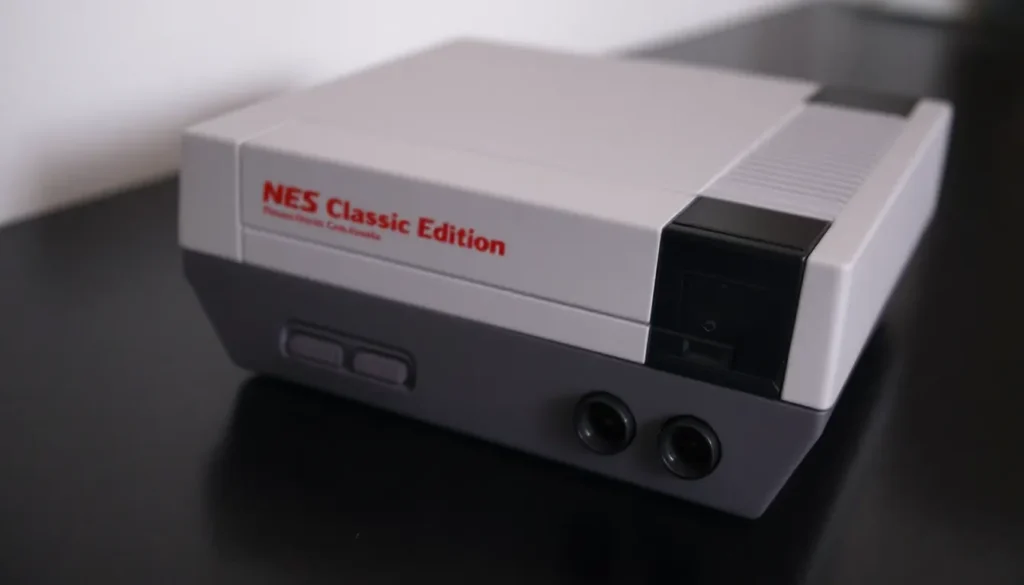
The NES Classic Edition brought the magic of 1985 back to modern living rooms, and seven years later, it’s still the gold standard for retro gaming hardware. If you’re hunting for NES classic edition games, you’ve already made the smartest decision, this little gray box packs 30 carefully curated classics that defined an entire generation of gaming. Whether you’re a collector dusting off childhood memories or a newcomer curious about what made the NES legendary, this guide breaks down every game in the library, highlights the hidden gems, and shows you exactly how to maximize your experience. The NES Classic isn’t just nostalgia bait: it’s a functional museum piece that demonstrates why these games still hold up mechanically and creatively today.
Key Takeaways
- The NES Classic Edition delivers 30 pre-loaded games with pixel-perfect emulation via HDMI, making it the most practical and affordable way to experience NES classics without hunting for expensive, fragile cartridges.
- Super Mario Bros., Super Mario Bros. 3, The Legend of Zelda, and Metroid are essential starting points that showcase why the NES defined modern gaming architecture and remain mechanically sound today.
- Hidden gems like Excitebike, Ice Climber, Punch-Out!!, and Wario’s Woods prove the NES Classic library’s depth extends well beyond famous franchises, offering genuine variety for diverse gaming preferences.
- The NES Classic’s save-state feature, wireless controllers, and multiple display options (scanlines or widescreen) make it dramatically more accessible than original 1980s hardware while maintaining authentic emulation quality.
- Discontinued in 2017, the NES Classic remains the smart value proposition for collectors and newcomers alike, preserving gaming history in a sealed, maintenance-free system unaffected by digital licensing issues or server shutdowns.
What Is The NES Classic Edition?
The NES Classic Edition is a miniaturized, HDMI-connected recreation of the original 1983 Nintendo Entertainment System, released by Nintendo in November 2016. It’s a plug-and-play system that requires zero cartridges, all 30 games come pre-loaded on the console itself. The hardware runs at 16:9 widescreen output with pixel-perfect emulation, meaning you’re not playing upscaled blurry versions but rather genuinely sharp, accurate reproductions of the original 8-bit gameplay.
Unlike the original NES, which required blowing into cartridges and dealt with the infamous “blinking light of death,” the Classic Edition boots instantly and maintains rock-solid stability. It comes bundled with two wireless controllers modeled after the original NES gamepads, though you can connect modern controllers if needed. The system is compact, roughly 4 by 2 inches, making it ideal for collectors with limited shelf space.
Nintendo discontinued the NES Classic in 2017, which created an immediate collector’s market. Demand far outpaced supply during its original run, and finding one at MSRP ($59.99) became nearly impossible within weeks. Today, the secondary market still prices them at a premium, but the unit remains the best value proposition for experiencing NES classics on authentic hardware without hunting down 40-year-old cartridges.
Complete Game Library Breakdown
The NES Classic Edition features exactly 30 games split between Nintendo’s own releases and carefully selected third-party titles. This isn’t a comprehensive NES library, the original system had nearly 700 licensed games, but it represents Nintendo’s judgment on which titles genuinely matter.
Nintendo Exclusives And Fan Favorites
Nintendo’s own games make up the core of the collection. Super Mario Bros. (1985) launches first and remains the most essential NES experience: it’s the game that saved the industry and defined the platformer genre. Super Mario Bros. 3 improves on the formula with flight mechanics, varied stages, and tighter controls, many consider it the superior game. The Legend of Zelda offers overhead-view adventure gameplay that still feels fresh, with genuine exploration and combat variety. Zelda II: The Adventure of Link takes a wildly different side-scrolling approach that confuses new players but rewards patience.
Other Nintendo standouts include Metroid, a moody action-exploration hybrid that invented the “Metroidvania” genre: Donkey Kong, the arcade port that sparked Mario’s existence: and Donkey Kong Jr., a criminally underrated platformer. Mario Bros. is the pure arcade experience before the “Super” branding. Punch-Out.. delivers boxer-game satisfaction with pattern recognition and precise timing: it’s harder than it looks but fair.
Kirby’s Adventure shows why Kirby’s core mechanics remained viable for decades, the copy ability and flight mechanics create genuine gameplay variety. Excitebike is an underrated gem combining racing with track design, letting players create custom courses. Ice Climber offers brutal difficulty with decent co-op support. Mario’s Cement Factory and Wario’s Woods round out the Nintendo catalog with lesser-known but functional puzzle experiences.
Nintendo also included Balloon Fight (an under-the-radar action title), Clu Clu Land (a timing-based puzzle-action game), and Pinball (a digital pinball machine that’s oddly engaging). Players new to retro gaming should prioritize the Mario series, Zelda, and Metroid, those three franchises alone justify the NES Classic’s existence.
Third-Party Classics Worth Playing
The third-party slate is equally impressive. Pac-Man and Galaga are arcade royalty translated to home consoles. Mega Man is a tough-as-nails action platformer with pattern-based boss fights that defined the difficulty curve. Castlevania delivers gothic atmosphere with whip-based combat and genuinely challenging level design. Double Dragon pioneered beat-em-ups on consoles with side-scrolling brawler action that still feels solid.
Contra is famed for its extreme difficulty, and the original Konami Code (↑ ↑ ↓ ↓ ← → ← → B A) spawned from players desperately seeking help. Gradius is a horizontal shoot-em-up with power-up mechanics that influenced countless shmups. Bomberman offers grid-based puzzle-action that’s perfect for multiplayer chaos.
Adventure is Atari’s weird, proto-adventure text game ported oddly to NES, it’s more historical curiosity than essential play. Ghosts ‘n Ghouls is a brutal action platformer that will frustrate modern players accustomed to forgiving difficulty curves. Ghouls ‘n Ghosts (the sequel) doubles down on the pain. Ninja Gaiden blends action with a surprisingly coherent story, setting the template for action games with narrative.
Tecmo Bowl is the legendary football game that somehow made button-mashing fun. Kirby’s Adventure deserves mention again because it’s genuinely excellent. The remaining slots go to Final Fantasy (the turn-based RPG that started the franchise), Star Force (a space shooter), and Donkey Kong Classics (both original arcade ports bundled together).
Each game on the NES Classic Edition was hand-selected to represent the best of what the system offered, making this collection stronger thematically than a complete cartridge collection would be.
Best Games To Start With For New Players
If you’re new to the NES Classic Edition or retro gaming in general, jumping into every game at once is overwhelming. Start with these titles to understand why the NES mattered, then expand from there.
Timeless Platformers
Super Mario Bros. is mandatory. It’s not just the best starting point, it’s the only starting point for understanding gaming history. The game is intuitive enough that even young children can grasp jumping and running, yet tight enough that mastering it takes genuine practice. Expect to clear the game in about 30 minutes your first time, but speedrunners still compete on this game decades later.
Super Mario Bros. 3 should come second. The learning curve is gentle compared to the original, and the variety in level design (ice worlds, sky worlds, undergrounds) keeps the experience fresh across the 12-stage campaign. Acquiring power-ups like flight feels earned and powerful.
Kirby’s Adventure is the most forgiving platformer on the system. Kirby can fly indefinitely (no power-up needed), his copy ability gives you options for approaching enemy patterns, and enemies respawn generously if you die. It’s perfect for players who want platform action without mastery-level execution demands.
Excitebike is shorter than traditional platformers but offers genuine variety in how you approach each track. The track editor mode lets you design custom courses, extending longevity indefinitely. It’s accessible but has a mechanical depth that reveals itself over time.
Action And Adventure Essentials
The Legend of Zelda is the adventure template. It’s not a platformer: it’s exploration mixed with puzzle-solving and combat. Health management matters, rupee (currency) collection drives progression, and the overworld rewards exploration. New players should allow 3-4 hours minimum: veterans can speedrun it in under 30 minutes.
Metroid merges action and exploration into something genuinely unique. The game never holds your hand with map markers: you’re figuring out where to go by examining the environment. Some players find this frustrating by modern standards, but the atmosphere and weapon progression (missiles, super missiles, grapple beam) create genuine excitement when upgrades unlock new areas.
Ninja Gaiden is action-focused with a surprisingly coherent story told through cinematics. The difficulty spikes are real, but checkpoint placement is forgiving. If you want traditional action without constant deaths, this is more approachable than Contra.
Double Dragon is the beat-em-up entry point. You and a friend (or the AI) punch your way through stages with simple combos and power-ups. It’s less mechanically complex than later brawlers, making it ideal for understanding the genre’s DNA.
Contra should wait until you’ve mastered the basics on easier games. It’s legendary for difficulty, and that reputation is earned. The Konami Code (hold Start when the game boots to activate 30 lives) is essential for new players: even with it, expect substantial frustration.
Hidden Gems And Underrated Titles
While Super Mario Bros. and The Legend of Zelda command attention, the NES Classic houses several lesser-known games that deserve exploration. These titles won’t appeal to everyone, but they demonstrate the breadth of NES gaming.
Overlooked Masterpieces Worth Discovering
Excitebike receives consistent underappreciation even though being mechanically inventive. Horizontal scrolling racers dominate arcade libraries, but Excitebike’s track editor, letting you design custom courses and share them, was revolutionary for 1984. The bike physics (managing wheelies and heat management) feel weighty and responsive even by modern standards. Give it an hour, and the depth reveals itself.
Ice Climber is brutal and weird. You’re climbing vertical stages (not jumping between platforms) while fighting enemies and avoiding obstacles. It’s short (around 15 minutes for experienced players) but fiendishly difficult. The co-op mode is chaotic in the best way, both players must work together or compete for the same space.
Wario’s Woods is a block-stacking puzzle game that’s both meditative and competitive. It’s significantly more interesting than generic Tetris clones because the mechanics involve moving blocks after they’ve landed, creating tactical depth. Multiplayer competitive mode gets surprisingly intense.
Punch-Out.. is famous among enthusiasts but overlooked by casual collectors. It’s a boxing game where you don’t control movement, only punching. Learning each opponent’s pattern (Glass Joe has a tell every five seconds, King Hippo has a mouth vulnerability) creates genuine learning curves. The difficulty escalates intelligently, and beating the game genuinely feels earned.
Ballly’s Space Voyage (listed as “Adventure” on the NES) is more historical novelty than essential play, but it’s genuinely bizarre, a prototype adventure game where you navigate maze-like screens hunting treasures. It’s obtuse by modern standards but shows the medium’s experimental roots.
Niche Games For Dedicated Collectors
Final Fantasy is an odd inclusion because it’s an RPG, a genre most NES owners encountered through Dragon Quest or Ultima rather than this sprite-based adventure. It’s turn-based combat with job classes, character customization, and 15+ hours of content if you engage fully. The game doesn’t explain mechanics well, requiring external guides or experimentation. Dedicated RPG fans will appreciate it: action-focused players will bounce off.
Tecmo Bowl is football translated to button-mashing action. It’s historically significant (the first officially licensed NFL game on home consoles) but alien by modern sports-game standards. There’s no playbook depth, you select a play and execute it. Multiplayer chaos is the draw.
Balloon Fight is Joust-adjacent: you’re floating and defeating enemies without directly attacking them. Mechanics revolve around timing your vertical positioning. It’s short and mechanically simple but rhythmic once you internalize the spacing.
Clu Clu Land is a puzzle-game oddity where you’re a creature on a grid-based level pushing blocks to reach treasure. It’s timing-based: move too early, and you miss the path. It’s more meditative than exciting but has genuine problem-solving satisfaction.
Star Force and Galaga are arcade shoot-em-ups that translate reasonably well to the NES. They’re brief (10 minutes to clear) but possess endless replayability through score-chasing. Galaga’s difficulty curve is gentler, a better starting point for the shmup genre.
Gameplay Features And Technical Specs
The NES Classic Edition is engineered specifically for accurate emulation with modern conveniences. Understanding its technical foundation helps explain why it remains valuable for retro collectors.
The hardware runs on ARM-based architecture with custom software that emulates the original NES chipset. Nintendo partnered with Analogue (a third-party retro hardware specialist) to ensure pixel-perfect accuracy. The result is indistinguishable from playing original cartridges on original hardware, a claim few emulation projects can make credibly.
Output is native 720p via HDMI, with 4:3 aspect ratio in bordered mode (showing scanlines) or stretched 16:9 in widescreen. Both options are toggled via the controller, letting you adjust presentation preferences mid-gameplay. The scanlines mode is excellent if you own a CRT monitor: widescreen mode works better on modern flat-screens.
The wireless controllers use standard 2.4GHz frequency with typical wireless latency (negligible for NES games). Battery life is roughly 30 hours per AA pair. Wired controller support exists through USB adapters, but wireless is stable enough that wired isn’t necessary. The button layout mimics original NES pads but with slightly improved ergonomics, not comfortable for extended play sessions if you have larger hands, but functional.
Save states are the biggest convenience feature distinguishing the Classic from original hardware. Every game allows multiple save states at any moment, letting you suspend and resume without finding emulator menus. This dramatically reduces friction compared to original cartridges, where only some games featured battery-backed saves.
Multiplayer is supported on games that offered it originally. Balloon Fight, Double Dragon, Bomberman, and several others support two controllers simultaneously via a second wireless unit purchased separately. Multiplayer games use alternating-turn systems (typical for arcade ports) rather than simultaneous co-op, with exceptions like Double Dragon supporting genuine co-op.
Sound is mono output through a standard 3.5mm jack. The audio quality is faithful to original NES sound, meaning it’s compressed and tinny by modern standards, exactly as it sounded in 1985. If you prefer improved audio, third-party mods exist but void warranty.
The system includes no online functionality, storage expansion, or ability to install additional games. What ships (30 games) is what you get. This limitation is actually a strength for collectors, no bloat, no updates, no feature creep. The sealed nature makes the hardware feel like a permanent time capsule rather than a platform requiring maintenance.
How To Get The Most Out Of Your NES Classic
Owning the NES Classic is straightforward, but maximizing your experience requires understanding setup and customization options.
Setup And Controller Options
Initial setup takes five minutes. Connect the HDMI cable to your TV, plug in the power adapter, and power on. The system boots instantly, no loading screens or firmware updates. The bundled wireless controllers are pre-synced: simply turn them on, and they connect immediately.
For TV optimization, adjust the display settings in the system menu. If your TV is HD or 4K, the 720p output will be sharp via HDMI. Scanline filters add visual authenticity if you’re playing on a modern display: widescreen mode stretches the image to fill 16:9 screens. Both are toggleable without rebooting.
Controller options extend beyond the bundled wireless units. USB adapters (sold separately) allow wired NES controllers or modern gamepads (Switch Pro Controllers, PlayStation controllers, Xbox controllers) to connect via the console’s USB port. This is useful if you prefer wired controllers or if wireless batteries die mid-session. The system recognizes controller inputs instantly without requiring configuration.
For serious collectors, purchasing a second wireless controller ($30-50) enables multiplayer on compatible games. The cost is worth it if you’re regularly playing two-player titles like Bomberman or Double Dragon.
Room setup matters. The console generates minimal heat, so ventilation isn’t critical. The HDMI cable reaches 10 feet comfortably if your TV is that distance away. The wireless controllers work reliably up to 30 feet with walls between the console and controllers, typical living-room ranges pose no issues.
Customization And Enhancement Tips
Save states are your best friend. Before attempting difficult bosses (Contra’s alien mothership, Metroid’s Ridley), create a save state. If you die, simply load it without replaying the preceding 20 minutes. This feature alone makes the NES Classic dramatically more accessible than original hardware.
Controller customization within game menus is limited compared to modern titles. Some games like Tecmo Bowl let you adjust game speed (slowing down animations), but most games offer no in-game settings. Display settings (scanlines, aspect ratio) are the main customization available at the system level.
For audio enhancement, third-party mods exist (FPGA-based sound chips that improve audio quality), but these require opening the console and voiding warranty. The stock audio is authentic: upgrading it is purely a preference decision. Gaming sites like Game Rant occasionally cover retro audio mods if you’re interested in exploring those options further.
Regular maintenance is minimal. The console doesn’t overheat, accumulate dust easily due to its sealed design, and the controllers charge via AA batteries (replaceable). Power down the system after play sessions rather than leaving it in standby, the NES Classic has no sleep mode, so “off” is the only low-power state. The hardware is durable: original units from 2016 remain fully functional without degradation reported.
For extended gameplay sessions, consider a controller grip or charging dock for wireless controllers. The stock controllers lack ergonomic padding, making multi-hour play sessions fatiguing for adults. Grips ($15-25) address this without functional changes.
Network functionality doesn’t exist on the NES Classic, so no firmware updates or patches arrive. This is simultaneously a limitation (no software improvements over time) and an advantage (the system never breaks due to update issues). What you own is what you’ll always have, permanent, stable, unchanging.
Comparison With Original NES Hardware
Understanding how the NES Classic compares to original NES cartridge systems clarifies whether collectors should invest in vintage hardware or the modern reissue.
The original NES (released 1983-1985) is significantly bulkier, requiring RF cables or composite video connections. It outputs at lower resolution (320×240) with heavier scanlines due to CRT-era display technology. The joysticks (especially on original controllers) wear out after heavy use: worn joysticks become unresponsive. Cartridges themselves are prone to corrosion and degradation, the infamous “blinking light of death” occurred when cartridge connectors oxidized, requiring constant cleaning and reinsertion.
The NES Classic solves all these hardware reliability issues. Controllers remain responsive indefinitely (no moving mechanical components wear out), video output is clean via HDMI, and games load instantly without cartridge insertion rituals. There’s zero maintenance beyond occasional controller battery replacement.
Game availability differs dramatically. The original NES library includes nearly 700 licensed games: the NES Classic offers 30. If your must-play game isn’t among those 30, you need original cartridges. Conversely, if you want only the essentials, the NES Classic curates a stronger collection than randomly assembling cartridges.
Cost comparison is nuanced. Original NES consoles in working condition run $150-400 depending on condition. Individual cartridges average $30-100 each depending on rarity. A complete collection of the 30 NES Classic games as original cartridges would cost $900-2,000. The NES Classic currently sells for $60-150 on the secondary market (original MSRP was $59.99). Cost-wise, the Classic is dramatically superior if you want a comprehensive collection.
Authenticity is subjective. Purists argue nothing matches original hardware on a period-correct display (CRT television). The NES Classic is emulation, not original silicon. But, the emulation is cycle-accurate and pixel-perfect, visually and functionally indistinguishable from originals for casual or competitive play. Professional speedrunners compete on the NES Classic without complaints about accuracy.
The NES Classic solves portability through its compact form factor. Original NES consoles are heavy and require television access. The Classic fits in a backpack, making it genuinely portable if you connect it to a portable monitor or hotel TV.
Maintenance demands differ. Original NES systems require periodic cartridge cleaning (compressed air to remove oxidation), controller joystick replacement (common wear item), and potential power supply recapping (capacitors degrade over 40 years). The NES Classic has no user-serviceable parts: it either works or doesn’t. Durability appears excellent, units from 2016 remain fully functional without reported widespread failure rates.
For collectors seeking authentic nostalgia, original hardware provides psychological satisfaction, you’re holding the exact system you played in 1987. For players seeking practical access to NES classics, the NES Classic is objectively superior in convenience, reliability, and value. Most enthusiasts own both: the Classic for regular play, original cartridges for collection authenticity.
Why NES Classic Remains Essential For Retro Gaming
Seven years after release, the NES Classic is still the best entry point for retro gaming. This isn’t nostalgia speaking, it’s practical reality reflected in collector demand.
The NES defined modern gaming architecture. Every console that followed (SNES, PlayStation, Xbox) descended from NES design principles. Playing NES games isn’t playing ancient relics: it’s understanding the foundational language of interactive entertainment. You can’t fully appreciate modern game design without understanding what the NES established.
Game design quality is timeless on many titles. Super Mario Bros. isn’t charming because it’s old: it’s charming because the level design teaches players intuitively without tutorials. The Legend of Zelda doesn’t feel ancient because exploration is rewarded consistently. Metroid isn’t dated because the atmosphere carries weight. These aren’t games from a specific era appreciated only for historical value, they’re genuinely well-designed experiences that transcend their hardware limitations.
The NES Classic solves gatekeeping issues plaguing retro gaming. Original cartridges cost hundreds of dollars, require authentic hardware (expensive and fragile), and are becoming rarer yearly as collectors hoard supplies. The NES Classic democratizes access, a collector, casual gamer, or curious newcomer can experience authentic NES gameplay for under $150. This accessibility preserves gaming history rather than locking it behind wealth barriers.
Physical media is increasingly endangered. Digital storefronts remove games constantly due to licensing disputes, server shutdowns, or corporate restructuring. The NES Classic is a permanent, self-contained system unaffected by internet connectivity, server availability, or corporate decisions. In an era of digital fragility, the Classic’s tangible permanence is genuinely valuable.
Competitive communities remain active around NES games. Speedrunning communities compete in real-time on Super Mario Bros. and Contra. The world record for Super Mario Bros. is under 5 minutes, optimization at that level requires frame-perfect execution and strategy innovation. The NES Classic enables entry into these communities at legitimate competitive levels.
Educationally, the NES Classic teaches game design fundamentals better than most modern tutorials. Level design, pacing, difficulty curves, player communication (visual cues instead of tutorial text), and mechanical depth are visible in every game. Game design students often study NES titles specifically because the limitations forced elegance in core mechanics.
For collectors, the NES Classic occupies a unique position. It’s not expensive enough to require serious financial commitment, it’s modern enough to be reliable, and it’s official enough to appeal to people uncomfortable with third-party emulation. Unlike the SNES Classic (also discontinued but more expensive on the secondary market) or obscure retro devices, the NES Classic is widely available, understood, and respected.
The community surrounding the NES Classic remains vibrant. Modding communities create custom themes and controller skins. Speedrunning communities compete at world-class levels. Casual players share their experiences across streaming platforms. This sustained interest seven years after discontinuation speaks to the product’s genuine value beyond marketing hype.
For new players, the NES Classic is the practical starting point. It’s not the only retro gaming option, but it’s the most accessible, reliable, and curated. You could explore alternatives, original hardware, ROM emulation on PC, classic games on Steam, or homebrew devices, but the NES Classic does the job better for most people. It’s a product designed correctly at its intended price point, offering genuine value without compromise.
Conclusion
The NES Classic Edition is exactly what retro gaming needed, accessible, reliable, and unapologetically focused on quality over quantity. Its 30-game library represents the NES at its peak, eliminating the filler while preserving the masterpieces that changed gaming forever.
Whether you’re a collector seeking physical authenticity, a newcomer curious about gaming history, or a competitive speedrunner needing legitimate hardware, the NES Classic delivers. The decision between original hardware and the Classic isn’t binary: most enthusiasts own both, using the Classic for regular play while preserving original cartridges as collectibles.
In an industry dominated by cutting-edge graphics and complex narratives, the NES Classic proves that thoughtful game design transcends hardware limitations. Super Mario Bros. remains fun in 2026 because good design is timeless. The NES Classic preserves that legacy in a form factor that works with modern living rooms while respecting the past.
For retro gaming in 2026, the NES Classic remains the smart play, it’s the most practical entry point, the most reliable hardware, and the best return on investment. Seven years of discontinued status hasn’t diminished its value: if anything, scarcity has clarified how genuinely well-conceived the product is. If you don’t own one, finding a copy and experiencing these classics firsthand should be high on your gaming bucket list.