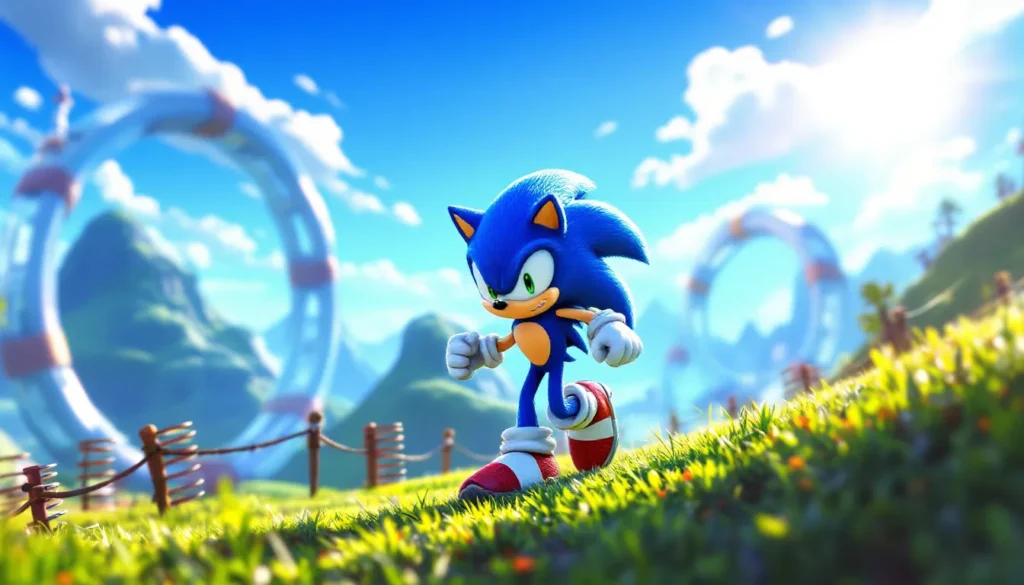
The blue hedgehog’s first appeared on screens in 1991 and changed platforming forever. Sonic the Hedgehog wasn’t just another platformer, it was a statement. While Mario favored careful, methodical platforming, Sonic proved that speed could be both mechanically sound and exhilarating. That philosophy defined an entire generation of games and made Sega’s Genesis a household name. From the genesis era classics to the hidden gems that flew under the radar, classic Sonic games delivered something special: the pure joy of momentum, exploration, and the satisfaction of memorizing every loop and shortcut. Whether you’re revisiting these games for nostalgia or discovering them for the first time, understanding what makes classic Sonic games tick reveals why they still resonate with gamers decades later.
Key Takeaways
- Classic Sonic games revolutionized platformer design by prioritizing speed and momentum as core mechanics, proving that fast-paced gameplay could be mechanically sound and exhilarating.
- The original Sonic the Hedgehog on Sega Genesis introduced level design with multiple paths that rewarded both speedrunning and exploration, creating incredible replay value.
- Sonic 3 & Knuckles represents the peak of classic Sonic games, combining refined level design, character-specific gameplay, and narrative depth across 14 zones with seamless integration through cartridge lock-on technology.
- Classic Sonic games remain accessible today through official compilations like Sonic Origins, Steam ports, and modern console releases, allowing new generations to experience their timeless design.
- Modern platformers continue to inherit the design philosophy of classic Sonic games, particularly momentum-based movement and exploration-focused level design that rewards player curiosity and skill.
- Despite being 30+ years old, classic Sonic games feel responsive and satisfying to play, proving that fundamental game design and player agency matter more than graphics or processing power.
What Made Classic Sonic Games Revolutionary
Classic Sonic games fundamentally changed how developers thought about platformer design. Before Sonic, the genre was dominated by careful, frame-by-frame precision. You’d walk, jump over obstacles, and progress methodically. Sonic flipped that on its head by making speed the core mechanic, not as a bonus, but as the foundation of level design itself.
The genius lay in the physics engine. When you’re moving at high velocity through a loop, the momentum carries you through naturally. Gravity, acceleration, and deceleration all felt weighty and responsive. This wasn’t cheap momentum: it was earned through skill. You had to understand how to maintain speed, when to jump, and where to brake. Skilled players could chain together combinations of loops, springs, and ramps in ways that felt like an extension of their will.
Another revolutionary aspect was level design philosophy. Classic Sonic games gave players multiple paths to reach the goal. A skilled speedrunner might find shortcuts that casual players missed. Meanwhile, exploring every nook and corner could reveal hidden zones or secret passages. This design philosophy, rewarding both speed and exploration, created incredible replay value. Games like the original on Sega Genesis were designed so that a single level could be completed in vastly different ways depending on player skill and curiosity.
The visual presentation supported the gameplay perfectly. The vibrant, colorful worlds with parallax scrolling backgrounds created the illusion of depth that complemented the speed-focused gameplay. When you’re blitzing through a loop at max velocity with stunning art whipping past, the psychological effect of speed intensifies dramatically. It made gamers feel fast, even if objectively the pixels-per-frame movement wasn’t technically the fastest thing on the system.
Classic Sonic games also prioritized player feedback. The sound design, those iconic spring sounds, ring collection chimes, and music, created immediate auditory confirmation of your actions. Combined with tight controls and responsive input, classic Sonic games felt incredible to play. That tactile quality is why the series still holds up mechanically better than many modern platformers that rely more on visual spectacle than gameplay substance.
Sonic The Hedgehog: Where It All Began
Sonic 1 Gameplay And Level Design
The original Sonic the Hedgehog released on the Sega Genesis in 1991 opened with an immediately iconic moment: Sonic bursting onto screen with the Dr. Robotnik theme blaring. That first level, Green Hill Zone, is perhaps the most famous opening stage in platformer history, and for good reason.
Green Hill Zone teaches everything you need to know about Sonic’s design philosophy in a single level. Wide-open spaces encourage exploration. Springs catapult you across gaps. Loops reward momentum and punish hesitation. Speed-boosting strips accelerate your velocity if you hit them right. The level is simultaneously a tutorial and a playground. New players can bumble through and reach the goal. Experienced players can sequence-break, find shortcuts, and complete it in under a minute.
The full game contains six zones, each with three acts. That’s 18 levels of escalating challenge. Marble Zone brings lava and more complex jumping challenges. Spring Yard Zone introduces crumbling platforms and more intricate layouts. Labyrinth Zone forces you to hold your breath underwater (a tension spike that’s genuinely stressful). Star Light Zone and Scrap Brain Zone round things out with their own unique gimmicks. Finally, Final Zone culminates in the confrontation with Dr. Robotnik in his flying fortress.
Level design here demonstrates incredible attention to pacing. Early levels are forgiving and encourage speed. Later levels demand more precision. Underwater sections force slower, more deliberate play. The pacing variation prevents the game from feeling monotonous even though its relatively short length. You’re constantly adjusting your playstyle to match the environment.
The special stages deserve mention too. Collect 50 rings and reach the end-of-level goal ring to warp into an isometric pseudo-3D bonus stage. These stages present a different challenge: navigating a twisting path while collecting rings and avoiding bombs. Success earns you an Emerald. Collect all six Chaos Emeralds and you unlock the true ending. It’s a satisfying meta-progression layer that incentivizes replaying levels.
Why Sonic 1 Defined The Platformer Genre
Sonic the Hedgehog arrived at exactly the right moment. The Sega Genesis was gaining traction against Nintendo’s established dominance. The industry needed a mascot and a killer app to justify the console. Sonic delivered on both fronts immediately.
What made Sonic 1 genre-defining was its fundamental rejection of the platforming orthodoxy established by Super Mario Bros. Instead of focusing on precision jumping over static obstacles, Sonic proved that a well-designed level could be about speed and momentum. This opened entirely new design possibilities. Level designers weren’t limited to careful pacing anymore: they could design with the assumption that players would be moving fast.
The game’s success also vindicated the Sega Genesis hardware. Where the NES emphasized charm and polish within technical limitations, the Genesis flexed its technical muscle. Sonic ran at 60 frames per second with smooth sprite animation and colorful backgrounds. It looked next-generation, and it played like nothing gamers had experienced before.
From a business perspective, Sonic 1 became iconic quickly. The character design was instantly recognizable, simple, bold, and eminently marketable. That blue quill-head became Sega’s answer to Mario, and children worldwide recognized him. Merchandise sales, cartoon adaptations, and cultural presence followed naturally.
Mechanically, Sonic 1’s influence on platformer design is still visible today. Games that allow multiple paths through levels, reward exploration, and emphasize momentum-based movement all owe something to Sonic’s blueprint. The game proved that “speed” as a game mechanic was viable and thrilling when executed properly. Games like Sega Video Game Consoles shaped an era, and Sonic 1 was the driving force behind that shift.
Sonic 2: The Sequel That Exceeded Expectations
Introducing Tails And Enhanced Speed Mechanics
Sonic 2, released in 1992, inherited the successful formula from the original and expanded it significantly. The most obvious addition was Miles “Tails” Prower, the orange two-tailed fox who’d become Sonic’s sidekick. In single-player mode, Tails follows Sonic automatically, which actually serves a gameplay function: he can hover over pits for a few seconds, allowing players to make jumps that would otherwise be impossible. This created new level design possibilities that the original game’s designer constraints didn’t allow.
Multiplayer also introduced a competitive split-screen mode where one player controlled Sonic and the other controlled Tails. This was a bold choice, raw competition rather than cooperation. Racing through a level simultaneously added a new dimension to the game’s replay value, especially in the era before online multiplayer made head-to-head gaming trivial.
The speed enhancements in Sonic 2 are subtle but meaningful. Sonic feels fractionally faster, the level designs accommodate higher velocities, and the pacing reflects this confidence. The developers clearly understood what worked about the first game and were willing to push it further rather than play it safe.
Super Sonic also makes its debut in Sonic 2. Collect 50 rings and hit the end-of-level goal ring to access bonus stages. Gather all six Chaos Emeralds, and Sonic gains the ability to transform into Super Sonic, an invincible, golden version that flies through the sky. This power-up adds another layer to the endgame and makes collecting emeralds feel genuinely rewarding. Super Sonic doesn’t trivialize the game so much as let skilled players breeze through challenges, which is earned progression.
Standout Levels And Hidden Zones
Sonic 2 expanded the zone count to 11, each with three acts. That’s 33 levels of content, roughly double the first game. The quality remained consistently high, though some zones are clearly more memorable than others.
Emerald Hill Zone opens the game and immediately feels like an evolution of Green Hill. It’s more complex, with more varied obstacle placement and trickier sections. Chemical Plant Zone brings underwater sections with a timer, if you don’t resurface quickly enough, you take damage. The underwater physics feel appropriately sluggish, contrasting with Sonic’s normal speed.
Aquatic Ruin Zone leans harder into the water gimmick with ancient temple aesthetics. Casino Night Zone is pure spectacle: bumpers, flippers, and casino imagery create a pinball-like experience. Notably, this zone contains the infamous Sonic 2 level loop glitch where skilled players could repeatedly bounce through certain sections, a quirk that speedrunners still exploit today.
Hill Top Zone and Mystic Cave Zone follow, offering variety in their gimmicks. Sky Chase Zone presents a unique scenario: riding on a biplane while Dr. Robotnik chases you. Wing Fortress Zone brings Robotnik’s fortress into view as you approach it. Death Egg Zone finally delivers the climactic confrontation.
Hidden zones exist here too. Oil Ocean Zone was famously removed from early development but remains inaccessible in the final game without hacking, or through deliberate sequence-breaking that speedrunners discovered. Finding these secrets or reading about them in gaming magazines (this was the pre-internet era for many players) added intrigue and mythology to the game.
Hidden Palace Zone eventually became accessible through elaborate button combinations and zone codes. Its existence as a secret added to the game’s sense of mystery. Discovering that an entire zone was hidden in the cartridge felt like uncovering treasure.
The chemical plant level particularly stands out. The art direction, green chemical vats, industrial piping, the contrast of industrial decay with vibrant colors, created a unique aesthetic. Mechanically, it forced players to adapt their playstyle. Speed becomes less reliable when you’re wading through water. Jumping must be more precise. The level design respected this constraint, creating challenges that felt like they existed for reasons beyond arbitrary difficulty.
Sonic 3 And Sonic & Knuckles: Reaching Peak Performance
The Storyline Advancement And New Characters
Sonic 3 arrived in 1994 as a significant step forward, both technically and narratively. The game introduced Knuckles the Echidna, a new character who didn’t start as an ally but as a rival manipulated by Dr. Robotnik. This addition created genuine story complexity, something the first two games didn’t prioritize. Knuckles could glide short distances and climb walls, giving him different movement capabilities than Sonic.
The story picked up genuine threads from the previous games. The Death Egg from Sonic 2 wasn’t destroyed: it crashed on a floating island and requires repair. Robotnik manipulates Knuckles into guarding the Chaos Emeralds, convinced that Sonic means to steal them. This setup created the framework for a three-character narrative arc that would carry through the rest of the series.
Sonic 3’s presentation was noticeably more ambitious. The Genesis hardware was pushed harder. Animations were smoother. Parallax scrolling created deeper background layers. Some of the musical tracks, composed by Masato Nakamura, reached genuine artistic heights. Ice Cap Zone’s theme in particular became iconic, moody, melancholic, and perfectly matching the zone’s aesthetic.
The level design incorporated Knuckles’ unique abilities. In single-player, Knuckles’ sections featured his own distinct paths that Sonic couldn’t easily access. This created genuinely different experiences depending on which character you played. It was an early form of character-specific gameplay design that recontextualized levels entirely.
Cartridge Lock-On Technology And Extended Gameplay
Sonic & Knuckles, released in 1994 as a separate cartridge, introduced the “lock-on” technology that remains one of the Genesis era’s most memorable innovations. Rather than a standard game sequel, Sonic & Knuckles could connect to Sonic 3 through the cartridge slot on top. This created a seamless experience: Sonic 3 & Knuckles, a massive combined game.
Technically, the lock-on cartridge was simple: it allowed the cartridge ROM to be expanded without requiring a physically larger cartridge. It’s elegant hardware design. More importantly, it was brilliant marketing. Players could buy either game separately and still have a complete experience, or lock them together for an expanded adventure. The feature generated enormous buzz and demonstrated what the Genesis hardware could do.
The combined game spans 14 zones, each with three acts (the original Sonic 3 had six zones). That’s 42 acts total, an enormous amount of content for a cartridge-based game. The pacing between the games is seamless. You play through Sonic 3’s zones, then transition into Sonic & Knuckles’ zones, with difficulty and complexity escalating throughout.
Sonic & Knuckles also introduced new mechanics. The Pogo Spring shoes let Sonic bounce like a pogo stick. Shield varieties offered different protective properties: Fire Shield granted invulnerability to fire, Lightning Shield provided invulnerability to electric hazards and allowed double-jumping, and Aqua Shield granted underwater breathing. These shields added strategic depth without fundamentally changing how you played.
The game’s final zone, Doomsday Zone, is a no-ground chase through space where you must maintain Super Sonic’s flight while chasing Robotnik’s escape pod. It’s a climax that genuinely feels epic in scope. The resolution to the three-game narrative arc felt satisfying in a way that most platformers don’t achieve.
Collectively, Sonic 3 & Knuckles represents the peak of the classic Sonic formula. The design was refined through two prior iterations. The hardware pushed to its limit. The narrative stakes felt meaningful. Every component, level design, character abilities, music, visual presentation, and mechanical depth, reached exceptional quality. It’s the standard against which all future Sonic games are measured, and many argue it remains unmatched even by modern entries in the franchise.
Sonic CD: The Forgotten Gem On Sega CD
Time Travel Mechanics And Memorable Soundtrack
Sonic CD, released in 1993 for the Sega CD, exists slightly outside the main series timeline (not canonical to Sonic 1-3’s narrative). It remains one of the most underrated games in the entire franchise, partly because Sega CD had a limited install base and partly because its design innovations didn’t get replicated in subsequent games.
The central mechanic is time travel. Each zone contains time-distortion mechanisms. Collect at least 25 rings and build up enough speed while driving through a Time Warp post. This launches Sonic into the future or past. The “Bad Future” version of a zone is destroyed and polluted, industrial decay everywhere. The “Good Future” is beautiful and restored. Your goal in the past is to destroy Robotnik’s factories, which changes the present and future dynamically. This creates a meta-progression system where your actions across multiple timelines affect the final outcome.
This gameplay mechanic was genuinely innovative. It expanded puzzle-solving beyond “find the path forward.” Players needed to understand cause-and-effect relationships across time. Destroying a factory in the past meant that specific obstacles wouldn’t exist in the present. It made level exploration feel like genuine problem-solving rather than pure reflexes.
The soundtrack is legendary. Composer Naoki Tomita created tracks that are genuinely beautiful, some of the best video game music of the 16-bit era. The opening theme is instantly recognizable. Each zone has multiple versions (Present, Good Future, Bad Future, and past) with distinct musical arrangements. The variation in musical themes created emotional context for each timeline. Playing through the Bad Future with its darker, more ominous score created tension. Hearing the same zone’s Beautiful Future theme felt rewarding, validation that you were making progress.
Why Sonic CD Deserves Recognition Today
Sonic CD deserves more respect than it typically receives. The game’s design philosophy, rewarding exploration across multiple timelines, combining environmental puzzle-solving with platforming, incorporating time travel as a core mechanic, was genuinely ahead of its time.
The level design reflects this depth. Each zone is large enough to explore thoroughly and contains hidden areas that reveal the time travel mechanics. You can’t rush through Sonic CD like you might speed-run earlier titles. The game rewards deliberate exploration and curiosity. This philosophical difference makes Sonic CD feel unique within the classic Sonic library.
Platform-wise, the Sega CD’s technical capabilities enabled Sonic CD’s design. The CD format allowed for full-quality music, detailed sprite work, and larger levels than cartridge-based games could support. The developers took full advantage. The game looks and sounds markedly more impressive than the Genesis entries.
Unfortunately, the Sega CD was a commercial failure. The hardware was expensive, the library was limited, and many players didn’t own one. Sonic CD remained obscure for years. It wasn’t widely re-released or ported until much later, meaning an entire generation of gamers missed it entirely. The game’s critical reception improved significantly after its inclusion in compilations and modern ports, but the initial lack of accessibility hurt its legacy.
For modern players with access to classic games on Steam or other emulation methods, Sonic CD is absolutely worth experiencing. Its time travel mechanics, gorgeous art style, and phenomenal soundtrack make it feel special and distinct. While it doesn’t match the Genesis games in raw mechanical refinement, the physics feel slightly different, and some zones have pacing issues, the conceptual boldness makes it essential playing for serious classic Sonic fans.
The Genesis Era: Sonic 4 And Sonic Spinball
Sonic 4’s Technical Advancements
Sonic 4: The Final Quest released in 1994 as a minor entry in the classic Sonic saga. Where Sonic 3 & Knuckles represented the peak of the main series, Sonic 4 took a different approach. The game was more modest in scope, featuring a simplified visual style and a shorter campaign. This wasn’t laziness: it was a deliberate choice to bring Sonic to the aging Genesis hardware in a way that maintained performance.
Sonic 4’s visual presentation was notably different from prior entries. The graphics were more blocky and simplified, less detailed parallax scrolling, more straightforward visual design. The environments lacked the artistic sophistication of Sonic 3, and the sprite animation was chunkier. This wasn’t a technical failure so much as a pragmatic compromise.
Mechanically, Sonic 4 stayed faithful to the series formula. Speed-based level design, loops, springs, and exploration remained central. The physics felt slightly modified from Sonic 3, though the differences are subtle enough that casual players might not notice. The game’s five zones each had two acts (rather than three), which contributed to its shorter overall length.
The special stages used a different approach than the Chaos Emerald bonus rounds of earlier games. Rather than isometric 3D mazes, Sonic 4 used a side-scrolling format with rings to collect and obstacles to avoid. The Chaos Emeralds were available as rewards, but the accessibility and difficulty curve differed from Sonic 1-3.
From a technical standpoint, Sonic 4 represented what the aging Genesis hardware could still produce. By 1994, the Genesis was approaching five years old. Newer systems like the SNES and the Sega Saturn were on the horizon. Game developers were pushing ancient hardware to diminishing returns. Sonic 4 was a statement: the Genesis still had games in it, even if the visual polish couldn’t match cutting-edge technology.
Exploring Sonic Spinball’s Unique Pinball Approach
Sonic Spinball, released in 1993, took Sonic into completely unexpected territory: pinball. Rather than traditional platforming, Sonic Spinball merged platformer controls with pinball mechanics. Sonic rolls through pinball tables, using flippers, bumpers, and spring-loaded mechanics to navigate toward the goal.
The game is peculiar by design. Each “level” is a massive pinball table with multiple floors and sections. You control Sonic as he bounces around, but the physics incorporate pinball’s ball-simulation rather than traditional platforming gravity. It’s mechanically awkward compared to the series’ main entries, which is partly the point, this is a spin-off (literally) exploring “what if we combined Sonic with pinball?”
Even though its oddity, Spinball has genuine charm. The visual design leans into the pinball aesthetic with colorful tables, flashy bumpers, and aesthetic themes matching each “table.” The music is energetic and fits the tone. The game is shorter than a main series entry, but it’s a complete experience rather than a novelty tech demo.
Spinball was actually developed by Compile, not Sonic Team. This outside-team development might explain its willingness to experiment so radically. Rather than iterating on proven Sonic mechanics, Compile took the character and explored genuinely different gameplay. The result is a game that doesn’t feel like a “true” Sonic game, but it’s interesting precisely because of that deviation.
The game’s reception was mixed. Hardcore Sonic fans felt it strayed too far from the core formula. Casual players found it diverting but not compelling. It’s neither critically acclaimed nor despised, more a curiosity than a tragedy or triumph. In retrospect, Sonic Spinball represents an era when video game franchises weren’t locked into strict formula. Sonic could have pinball spin-offs, racing games, and fighting game cameos without corporate panic.
Playing Classic Sonic Games Today: Emulation And Re-Releases
Official Collections And Compilation Releases
Modern gamers have multiple legitimate ways to experience classic Sonic games without hunting down original hardware. The most accessible option is official compilations and re-releases. Sonic Origins, released in 2023, collects Sonic 1, 2, 3, CD, and Sonic the Hedgehog 3 (Knuckles edition) in a single package across PC, PlayStation, Xbox, and Nintendo Switch.
Sonic Origins includes both original versions and remastered editions of each game. The remaster changes have been somewhat controversial, some players prefer the original physics and feel of the Genesis versions, while others appreciate the visual enhancements. Importantly, the package includes both versions, so players can choose their preferred experience.
Earlier compilations like the Mega Collection series and Sonic Generations (which included recreations rather than direct ports) provided previous generations of gamers access to the classics. The 3D Sonic games like Generations served a different purpose, modernizing the classic games’ mechanics into 3D spaces, but they preserved the core experience for those without original hardware.
For Steam players, Sonic 1, 2, and CD are available individually, allowing piecemeal purchasing. Console players can access these through the digital stores on PlayStation, Xbox, and Nintendo platforms. The availability of classic Sonic games across modern platforms is genuinely remarkable compared to many other classic franchises.
The licensing complexity around some games (particularly involving the music from Sonic CD, which had different compositions in different regional versions) meant that faithful re-releases took time. Sonic Origins largely solved this by licensing both the original soundtracks and creating acceptable modern alternatives.
Best Platforms And Methods For Retro Gaming
Choosing a platform depends on your priorities. Nintendo Switch owners benefit from portability, playing Sonic games on the go is a genuine convenience. PC players can access them through Steam and enjoy mods if they choose, along with community-created tools for enhanced emulation if desired. PlayStation and Xbox versions provide the most consistent, clean experience on modern TV displays.
For the absolute most faithful experience to the original hardware, nothing beats either original Genesis cartridges (if you can find them at reasonable prices) or emulation with period-accurate settings. Emulators like Gens, Mednafen, or Bizhawk can replicate the original Genesis behavior down to minor graphical quirks and timing accuracy. This appeals to speedrunners and enthusiasts who care about frame-perfect gameplay.
The emulation scene remains active and accessible. Resources on platforms like Twinfinite provide walkthroughs and guidance for classic games, including Sonic titles. Many speedrunners document their techniques across YouTube and Twitch, showing exactly how to optimize runs using original hardware behavior.
For casual players, official compilations are the clear choice. They’re convenient, legal, and designed with modern displays in mind. Some retro purists argue that playing classic Sonic games through emulation is essential because original hardware provides the “true” experience, but this is more dogma than necessity. The core gameplay hasn’t fundamentally changed, a well-configured emulation or modern port will feel virtually identical.
Retro gaming hardware like the Analogue Mega Sg offers another option: a modern recreation of the Genesis hardware that plays cartridges natively. It’s expensive but provides an authentic hardware experience without relying on aging original consoles. These options exist in a niche market for enthusiasts willing to invest significantly.
The 90s game consoles era represented a unique period where starting costs for original hardware were reasonable. Today, collecting original Genesis consoles and cartridges has become an expensive hobby. Modern re-releases democratize access in a way that’s genuinely positive for gaming culture.
Why Classic Sonic Games Still Matter For Modern Gamers
Classic Sonic games remain relevant not through nostalgia alone, but because their design fundamentally solved problems that platformers still grapple with today. Speed-based level design creates a sensation of momentum and flow that precision-based platformers, no matter how well-designed, struggle to replicate. When a level is built around momentum and physics rather than pixel-perfect jumping, the gameplay feels different.
Modern platformers often emphasize challenge through complexity or frame-perfect precision. Games like Celeste or Hollow Knight are phenomenal, but they demand patience and repetition from players. Classic Sonic games offered a different challenge: understanding level design and optimizing your route. Even at maximum difficulty, the goal isn’t to perform impossible maneuvers, it’s to move skillfully through space.
The accessibility of classic Sonic games across skill levels is remarkable. A six-year-old can mash buttons and reach the goal through sheer collision-based progression. A speedrunner can complete the same level in under 60 seconds through route optimization and momentum conservation. This massive skill variance range in a single level is genuinely difficult to design. Modern games tend to segment difficulty explicitly (easy, medium, hard modes) rather than encoding difficulty into level design itself.
From a cultural perspective, classic Sonic games matter because they represent a complete alternative design philosophy. While Nintendo’s Mario series dominated the platformer space through sheer polish and accessibility, Sonic proved that a different approach, emphasizing speed, exploration, and momentum, could succeed creatively and commercially. That philosophical diversity enriched gaming as a whole.
Their influence on modern level design is undeniable. Games featuring momentum-based movement, multiple paths through levels, and reward-based exploration all trace lineage back to Sonic. Speedrunning as a community phenomenon partly exists because classic Sonic games made the practice intrinsically satisfying rather than merely competitive.
Modern resources like game guides and walkthroughs preserve and document classic Sonic knowledge. The speedrunning community maintains active research into these games, discovering new techniques, optimizing routes, and uncovering secrets even decades later. The games continuously reveal new depth to dedicated players.
For modern gamers experiencing classic Sonic games for the first time, the immediate takeaway is often surprise. Even though being 30+ years old, they feel responsive and well-designed. The controls never betray you. Levels never feel unfairly difficult. This smoothness is a testament to the original design philosophy prioritizing player agency. Many modern games, even though superior graphics and more complex systems, don’t feel as fundamentally satisfying to control.
There’s also historical significance. Classic Sonic games represent a moment when console manufacturers competed on exclusive franchises and innovative game design rather than raw technical specifications. They represent a time when games were designed by small teams with singular visions rather than corporate committees. Whether that’s genuinely true or merely romantic nostalgia, the perception influences how modern gamers relate to these games.
Classic Sonic games also represent pure gameplay design. Without engaging cinematics, voice acting, or story depth (though Sonic 3 added narrative), these games succeeded entirely because they were fun to play. That’s a design priority that gets overshadowed in modern AAA development, making classic Sonic games feel refreshingly focused. When you strip away everything except core gameplay, you see what these designers prioritized: moment-to-moment fun.
Conclusion
Classic Sonic games occupy a unique position in gaming history. They weren’t revolutionary because they featured the most advanced graphics or storytelling, they innovated at the level of core gameplay. The decision to build a platformer around momentum and speed rather than precision jumping fundamentally altered how the industry thought about level design.
From the revolutionary first game through Sonic 3 & Knuckles’ technical and design peak, the classic Sonic library represents consistent, thoughtful game design. Each entry refined the formula or experimented with new directions (Sonic CD, Sonic Spinball) without losing sight of what made Sonic special.
The enduring accessibility of these games through modern re-releases means a new generation can experience them without hunting down aging hardware. Whether played on Switch, PC, PlayStation, or Xbox, the core experience remains intact. Speedrunners still push these games to their technical limits. Casual players still find joy in the simple pleasure of rolling through loops.
Classic Sonic games demonstrate that timeless game design transcends graphical fidelity or processing power. A well-designed moment of gameplay, Sonic launching through a loop and landing perfectly on a spring, feels just as satisfying in 2026 as it did in 1992. That’s not nostalgia. That’s solid craftsmanship.
For modern gamers, classic Sonic games offer perspective. They’re proof that complexity doesn’t equal quality, that speed can be a game mechanic rather than a mere aesthetic, and that exploration-focused level design rewards curiosity. In an industry increasingly dominated by live-service mechanics and corporate homogenization, these games stand as monuments to when designers made games first and figured out licensing later.
Whether you’re revisiting childhood favorites or discovering these games for the first time, the classics remain absolutely worth playing. They’re not relics, they’re still some of the best-designed platformers ever created. Everything since has learned from their success, and the greatest retro games continue to prove that fundamental game design matters more than cutting-edge technology.