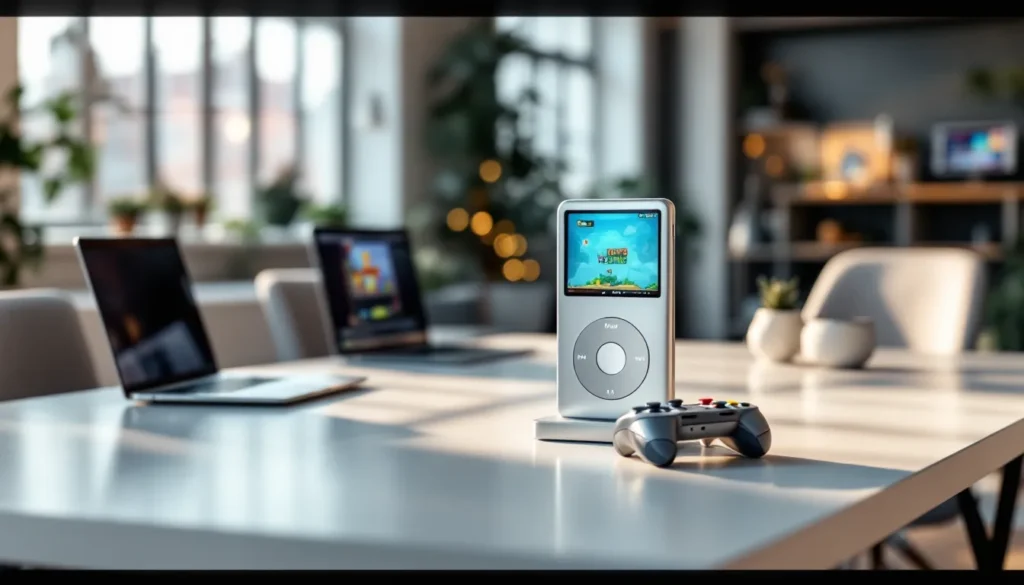
The iPod Classic wasn’t just a music player, it was a secret weapon for gaming on the go. Between 2007 and 2014, Apple’s iconic device became a haven for indie developers, ported retro titles, and experimental games that filled transit rides and quiet moments. While the iPhone eventually dominated handheld gaming, the iPod Classic left behind a curated library that still holds up today. In 2026, as retro gaming experiences resurface across modern platforms, understanding what made iPod Classic games special reveals why portable gaming has such staying power. Whether you’re hunting for lost gems from that era or looking to relive that specific blend of 160GB of storage packed with everything from Breakout to Texas Hold’em, this guide covers the definitive collection, how to access these games now, and why that pocket-sized library remains genuinely worth your time.
Key Takeaways
- iPod Classic games represent a golden era of portable gaming (2007–2014) where simplicity, accessibility, and offline gameplay thrived without aggressive monetization or live-service models.
- Iconic iPod Classic games like Plants vs. Zombies, Tap Tap Revenge, and The Room proved that constraints breed creativity, delivering engaging experiences through clever touch-screen design and thoughtful game mechanics.
- You can access iPod Classic games today through emulation (using Delta or similar tools with IPA files), legitimate Rockbox firmware installation, or by finding official rereleases on modern platforms like iOS, Android, and Switch.
- Building your ideal iPod game library requires 30–50 carefully chosen titles organized by genre rather than exhaustive collections, prioritizing games that match your actual play style over aspirational variety.
- The design philosophy behind iPod gaming, respecting player time and delivering satisfaction without monetization extraction, influences modern indie titles and remains increasingly relevant in 2026’s subscription and live-service gaming landscape.
Why iPod Classic Gaming Remains Legendary in 2026
The iPod Classic‘s gaming catalog feels like a parallel universe of handheld entertainment. Unlike the Game Boy or later dedicated handhelds, the iPod was never positioned as a gaming device first, which meant developers got creative within technical constraints. Games weren’t trying to push polygon counts or match console graphics: they were designed for quick play sessions, minimal battery drain, and instant accessibility from a device you already carried.
That scrappy attitude created a unique niche. A gamer could load a hundred games onto a single device, shuffle between titles casually, and never worry about save synchronization across platforms. The entire experience hinged on simplicity and choice, swap from puzzle games to action titles to music-rhythm games in seconds, all without dedicated cartridges or licensing overhead.
In 2026, that philosophy feels almost radical compared to mobile gaming’s freemium trap. The iPod Classic era predated aggressive monetization, battle passes, and persistent online requirements. Games were straightforward: you bought them once, they worked offline, and they didn’t demand constant updates. For competitive and casual gamers alike, that directness is increasingly appealing as a counterbalance to modern mobile bloat.
The iPod Classic didn’t survive, Apple discontinued the line in 2014, but its gaming legacy persists. Modding communities have kept these devices alive through custom firmware, and emulation has made the original catalog accessible across modern hardware. More importantly, the design philosophy behind those games, accessibility, variety, and respect for the player’s time, continues to influence indie gaming today.
The Golden Era of iPod Gaming
The window for iPod gaming opened around 2007 when the iPod Touch arrived with a functional touchscreen and the ability to install third-party software. Before that, iPods ran basic games through firmware, simple stuff like Breakout, Parachute, and Solitaire that shipped with the device. But once the Touch landed, things exploded.
Developers quickly realized they had access to millions of devices already in people’s pockets. The App Store launched in 2008, and suddenly the iPod Touch became a legitimate gaming handheld. This is when titles like Tap Tap Revenge (the proto-ancestor of every rhythm game mobile clone), Eternity Warriors, and Plants vs. Zombies became phenomenon-level hits. Unlike today’s fractured mobile landscape, every game needed to be optimized for consistent hardware, the iPod Touch hardware remained relatively stable, meaning developers could focus on polish instead of chasing device fragmentation.
This era coincided with what many call the indie gaming boom. Smaller studios could reach a massive audience without console certification boards or retail partnerships. Games like Super Monkey Ball, Flight Control, and ngmoco’s suite of casual titles found audiences measured in millions, purely through word-of-mouth and App Store visibility. The barrier to entry was low, but quality was essential, if your game sucked, the review system would bury it.
By 2010–2012, iPod gaming had matured. Developers understood touch-screen mechanics deeply. Freemium models were still experimental rather than predatory. The device’s technical limitations bred innovation: constraints force creativity, and iPod games are textbook examples of that principle. Then the iPhone’s dominance accelerated, and developers gradually shifted their focus. By 2014, when Apple discontinued the Classic, the Golden Era was already waning. But for a solid five to seven years, iPod gaming was where innovation and accessibility collided.
Iconic Games You Could Play On Your iPod Classic
Action and Adventure Classics
Action games on the iPod faced an interesting challenge: touch controls lack the tactile feedback of buttons and joysticks, so developers had to rethink responsiveness. Eternity Warriors nailed it by using swipe mechanics for combat. Players swiped across the screen to attack, and the game interpreted directional intent instantly. It was fast, responsive, and didn’t require a hardware keyboard. Super Monkey Ball translated its gyroscope-based gameplay to the Touch’s accelerometer seamlessly, tilt the device, roll the ball, navigate mazes. It worked because the hardware made it intuitive.
iFlood and similar physics-based puzzle-action hybrids also thrived on iPod hardware. Gravity, momentum, and object interaction became central mechanics when button inputs weren’t available. Doodle Jump turned simple jumping into an endless-runner phenomenon. Flight Control asked players to draw flight paths, creating a tower-defense-adjacent vibe but with tangible spatial awareness. These games didn’t just work on the iPod, they felt designed for it.
Adventure titles were trickier. Traditional RPGs didn’t map well to touch-only interfaces, but games like Zenonia and Sword of Fargoal adapted by simplifying stats and automating combat, letting players focus on exploration and item collection. The Quest brought old-school dungeon crawling to the device with surprisingly deep character customization. The key was understanding that iPod gaming wasn’t about recreating console experiences, it was about finding what the format did well.
Puzzle and Strategy Games
Puzzle games became the backbone of iPod gaming, and for good reason. Turn-based mechanics respect the device’s interface limitations, and puzzle design scales beautifully across difficulty levels. Plants vs. Zombies is the canonical example, simple tower defense with personality, humor, and a learning curve that kept players engaged for dozens of hours. The game didn’t require fast reflexes: strategy and timing mattered more. That balance made it accessible to casual players while offering depth for theorycrafters optimizing crop layouts.
Bejeweled and Match Three variants dominated the casual segment. Simple match-gem mechanics translated perfectly to touch. Peggle added physics and peg-clearing strategy, creating something that felt fresh even though the familiar gameplay loop. Puzzle Quest blended match-three with RPG mechanics, combining two proven formulas to create something engaging for longer play sessions.
Strategy games like Civilization Revolution brought actual 4X gameplay to handheld hardware. It was simplified compared to the mainline series, but it preserved the core loop: expand, explore, exploit, exterminate. Turn-based gameplay meant players could pause mid-turn, step away, and return hours later without penalty. Plants vs. Zombies 2 (which arrived on later iPod models) deepened that strategic focus with tower customization and plant combinations that rewarded system mastery.
The puzzle category proved that depth didn’t require processing power. The Room and The Room Two showcased how minimalist graphics and clever object interactions could create compelling puzzle-adventure experiences. Players spent hours rotating objects, finding hidden mechanisms, and experiencing that dopamine hit of finally solving an obscure puzzle. These games respected intelligence and observation: they didn’t coddle players.
Music and Rhythm Games
Tap Tap Revenge was the original sensation. It launched the tap-to-beat genre that eventually spawned hundreds of clones. The game stripped rhythm gaming to its essence: see note, tap the screen on beat, maintain a combo. No fancy graphics, no story, just raw mechanical feedback. But that simplicity was its strength. The game felt responsive, songs were culturally relevant, and the social sharing features made it spread through word-of-mouth.
Tap Tap Revenge evolved through multiple iterations, adding multiplayer, more challenging note patterns, and a deeper song library. Each version proved that rhythm gaming worked perfectly on the iPod Touch. The screen size wasn’t a limitation: it was ideal. Notes fell from top to bottom, players tapped at the bottom, and the tactile feedback from hitting notes on-time created immersion even though the lack of physical buttons.
Beat It and other rhythm titles tried variations on the formula. Some used swipes instead of taps. Others incorporated holding notes or sliding patterns. But Tap Tap Revenge remained the gold standard because it understood fundamentals: tight timing windows, responsive input, and satisfying audio feedback. Playing rhythm games on an iPod Touch felt different from the arcade: it was more intimate, more focused on personal skill rather than arcade spectacle.
The rhythm category proved that iPod gaming could deliver experiences that were mechanically competitive while remaining accessible. Casual players could enjoy songs on lower difficulties: rhythm-game enthusiasts could hunt high scores on expert patterns.
Sports and Racing Titles
Sports games on the iPod faced the same control challenge as action games, but developers found clever solutions. iBaseball and iFootball simplified sports mechanics into core interactions: tap to throw, swipe to kick, use accelerometer controls for aiming. These games weren’t simulations: they were distilled sports experiences that worked within the device’s constraints.
Real Racing became the racing benchmark for the platform. It used accelerometer tilt controls for steering, on-screen buttons for throttle and brake, and delivered surprisingly satisfying racing at 30fps. The game looked good for the hardware, ran smoothly, and proved that racing could work without a dedicated controller. Real Racing 2 expanded the roster, improved graphics, and added multiplayer, cementing iPod racing as more than a proof-of-concept.
Asphalt series (later titles) also pushed iPod racing forward with faster arcade gameplay and more visually ambitious presentations. Both franchises understood that racing on a portable device didn’t need to simulate F1 precision, it needed to feel responsive, look decent, and respect battery life.
Golf games like PGA Tour simplified eighteen holes into tap-and-swipe mechanics. Timing mattered more than precision aiming. Sports gaming on iPod proved that simplification wasn’t limitation, it was design opportunity. Strip away the complexity, focus on the fun, and let the hardware shine.
How To Play Classic Games On Your iPod Today
Using Game Emulators and ROMs
Emulation is the primary path for accessing iPod Classic games now. The original App Store library still exists, but finding these games requires patience and searching. Many developers have removed their apps over the years, making direct purchase impossible even if you wanted to buy them. Emulators step in to bridge that gap.
Simulations exist for iPod Touch running older iOS versions. Specifically, emulators like Delta (available on jailbroken devices or through direct installation on certain platforms) can run iOS apps packaged as IPAs (iOS application archives). ROM collections exist online, though legal gray areas apply depending on your jurisdiction, containing archived iPod games ready for installation.
The practical workflow: locate an IPA file for your target game, sideload it onto a jailbroken or otherwise modified device, and run it through an appropriate emulator. This requires technical knowledge. You’ll be hunting forum posts, GitHub repositories, and archive sites. It’s not plug-and-play, but the barrier isn’t as high as full console emulation setup.
Alternatively, some developers released their iPod games on other platforms. Tap Tap Revenge variants exist on modern mobile: Plants vs. Zombies remains available on iOS and Android in various versions. The Room series lives on Switch, PC, and console platforms. If you want to play the exact original iPod version, emulation is necessary. If you’re willing to accept the modernized equivalent, official channels work fine.
Rockbox Firmware and Game Compatibility
Rockbox is the major player here. It’s open-source firmware designed as a complete replacement for Apple’s iPod software. Installing Rockbox on a Classic or Touch gives access to games specifically compiled for Rockbox’s system. The catalog isn’t enormous, maybe fifty to a hundred games, but it’s legitimate and actively maintained.
Rockbox games include classics like Snake, Tetris variants, Breakout, card games, and puzzle titles. They run natively without needing iOS emulation. The technical process involves connecting your iPod to a computer, backing up existing data, and installing Rockbox using the automated installer. Most modern iPods (Classic, Touch, Nano) are compatible: older Shuffles aren’t, because, well, they have no screens.
The advantage of Rockbox is stability and device longevity. Games run incredibly light: you can’t destroy an aging iPod’s battery by running resource-intensive emulation. Rockbox also preserves the original iPod’s music functionality, you get your library intact alongside games. It’s a genuine alternative that doesn’t require sketchy ROM sourcing.
For newer users attempting to revive an old iPod, Rockbox represents the legitimate path. Documentation exists, community support is active, and the firmware has been maintained for years. Installing it voids any remaining warranty, obviously, but these devices are years past warranty anyway. Rockbox turns an antique into a functional retro device with music and games, which many consider the ideal endgame for a Classic sitting in a drawer.
Building Your Ultimate iPod Game Library
Storage and Organization Tips
The beauty of the iPod Classic wasn’t just its game library, it was that you could carry it all simultaneously. With 160GB of storage, you could realistically keep hundreds of games alongside tens of thousands of songs. Modern devices force compromises: iPod Classic forced nothing.
If you’re building a library on a physical device or emulating across modern hardware, organization matters. Create folders by genre: Action, Puzzle, Rhythm, Strategy, Sports. Within those, further organize by developer or alphabetically. Use consistent naming conventions so that when you’re scrolling through your library months later, finding a specific game takes seconds instead of minutes.
For those syncing via iTunes (the original workflow), sync playlists work similarly to games. You can create a “Games” category and sort by date added, ensuring recently downloaded games appear first. Modern syncing through emulators might differ, but the principle holds: structure reduces friction, and friction kills engagement.
Disk space was abundant on the Classic, but on modern storage-limited devices, be selective. An original iPod Touch maxed out at 64GB: newer iPhones allocate storage toward OS and modern apps first. Emulated games take minimal space, most IPAs are under 100MB, but accumulated they add up. Prioritize your absolute must-plays and tier less essential titles below them.
Recommended Game Collections for Different Preferences
For Casual Players seeking quick sessions: Start with Plants vs. Zombies, Tap Tap Revenge, Peggle, and Bejeweled. These games respect your time, deliver clear progression, and don’t punish long absences. Add The Room for occasional puzzle-solving sessions that feel more deliberate. This collection covers every mood without overwhelming choice.
For Strategy Enthusiasts: Civilization Revolution is non-negotiable. Add Puzzle Quest for hybrid strategy-puzzle depth, and Zenonia if you want RPG mechanics with strategic equipment choices. Include Fire Emblem Heroes (available on modern iOS but originated in that era’s strategy mindset) for turn-based tactical depth. These games reward planning and system mastery over reflexes.
For Rhythm and Music Fans: Obviously Tap Tap Revenge in multiple iterations. Layer in Beat It for mechanical variation, and Tapping Out if you want experimental note patterns. If available, find Guitar Hero mobile ports, they translated well to touch. This is a smaller category, but depth comes from replaying songs on progressively harder difficulties.
For Competitive Gamers chasing high scores: Doodle Jump, Flight Control, and Real Racing offer leaderboard potential. Eternity Warriors and Super Monkey Ball have skill ceilings worth exploiting. These games measure your performance precisely, making progression visible. Some players still hunt original iPod high scores on emulated versions, it’s a niche, but it exists.
For Completionists: Load everything. The beauty of iPod gaming was abundance. With massive storage, you could try every category without commitment. Stumbling onto a game you’d forgotten about, Koi, Sid Meier’s Pirates., Monkey Island, felt like discovery. That serendipity isn’t replicable through curation: it requires scope.
A solid foundation for most players runs 30–50 games. That’s enough variety to never feel bored without paralysis from too much choice. Add more based on your preferences, but start there and expand based on what actually gets playtime. Your ideal library reflects your actual gaming habits, not aspirational ones.
The Legacy of iPod Gaming and What It Means Today
The iPod Classic generation proved something that mobile gaming has somewhat forgotten: that games don’t need cutting-edge graphics, always-online requirements, or monetization strategies to matter. Many of those titles remain engaging in 2026, not even though their simplicity, but because of it. They understood what made games fun at a mechanical level.
That philosophy influences modern gaming across platforms. Indie developers mining retro aesthetics and mechanics often cite iPod-era design as inspiration. Games like Hades, Celeste, and Hollow Knight apply those principles, tight controls, clear feedback, meaningful progression, at larger scales. The DNA of iPod gaming isn’t extinct: it’s evolved.
The competitive gaming community has also rediscovered retrospective interest in iPod games. Speedrunners tackle The Room puzzles to optimize solution paths. Rhythm enthusiasts still engage with Tap Tap Revenge communities discussing pattern memorization strategies. High-score hunters use emulation to replay Doodle Jump on original versions with unmodified difficulty parameters. This isn’t mainstream, but it’s genuine engagement with decade-old games, which speaks to their design durability.
Modern mobile gaming often feels designed around extraction rather than engagement, keep players clicking, watching ads, spending money. iPod games assumed the opposite: sell the game once, deliver satisfaction, let players leave. That seemed quaint when the App Store launched. In 2026, as players increasingly resent aggressive monetization, that design philosophy looks prescient.
Why does this matter beyond nostalgia? Because understanding what worked reveals what still works. Games like those found in My Arcade Go Gamer collections prove that accessibility without complexity isn’t a limitation, it’s a feature. Classic games on platforms like Steam persist not through remakes or live-service updates, but through genuine mechanical appeal.
The iPod Classic is gone, but what it represented, a curated library of diverse, accessible games on hardware you already carried, is experiencing renewed appeal. Digital storefronts are fragmenting. Subscription services multiply. The iPod’s “buy once, play forever” model looks increasingly appealing in comparison. Whether you’re emulating original iPod games or discovering modern titles inspired by that era, you’re engaging with a design philosophy that proved more durable than the hardware itself.
For gamers tired of current trends, revisiting the iPod Classic library isn’t just nostalgia, it’s a reminder of what the industry got right before getting distracted by other priorities.
Conclusion
iPod Classic games remain a fascinating chapter in gaming history, a moment when portable gaming meant something other than smartphones, and when games rewarded player skill rather than payment. The library spans genres genuinely: rhythm games that hold up to serious timing precision, strategy titles with surprising depth, puzzle games that resurface hours later in your mind when you finally recognize the solution.
Accessing these games now requires some technical effort. Emulation works, Rockbox provides legitimacy, and some original titles survive on modern platforms. The effort is worth it. These games prove that constraints breed creativity, and that simplicity executed well outlasts technical complexity every time.
Building your collection doesn’t require exhaustiveness, start with genre fundamentals and expand based on what genuinely engages you. The iPod’s genius was offering choice without forcing consumption. Fifty games played deeply beats five hundred barely touched.
In 2026, when gaming increasingly chases spectacle and monetization, revisiting the iPod Classic era reminds you what gaming fundamentals actually are: responsive controls, clear feedback, meaningful progression, and respect for the player’s time. The device may be obsolete, but that philosophy remains relevant. Whether you’re hunting nostalgia or discovering why older design principles still matter, the iPod Classic game library deserves a place in your rotation.