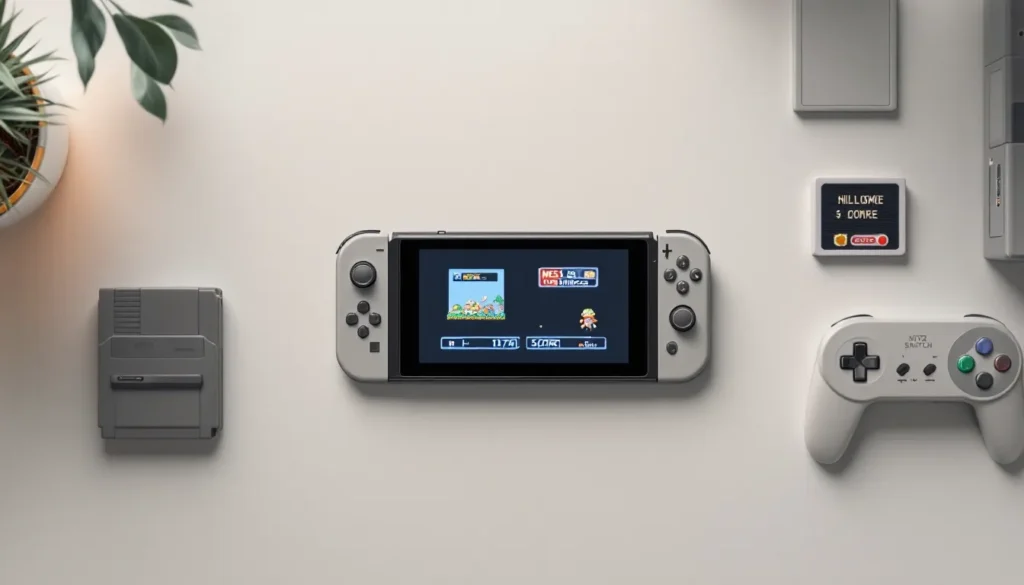
The Nintendo Switch has become the ultimate portable archive for gaming history. Whether you’re hunting nostalgia or discovering why these games still hit different in 2026, classic games on Switch offer something modern releases often miss: pure, focused gameplay that proves longevity beats graphical firepower. The system’s hybrid nature means you can experience these legendary titles anywhere, on your TV, in handheld mode, or docked on the go. From the pixelated perfection of the NES to the 16-bit glory of the SNES, Nintendo’s backward-compatible approach has created an unparalleled library. This guide breaks down the 15 essential Nintendo Switch classic games you need to play, how to access them, and why they still matter.
Key Takeaways
- Nintendo Switch classic games combine portability with optimized emulation, allowing you to experience foundational titles like Super Mario Bros. 3 and Chrono Trigger anywhere on your device.
- Nintendo Switch Online membership provides access to 100+ classic NES and SNES games for $20 annually, plus rewind features and save states that make these retro titles more accessible than original hardware.
- Essential classic games such as Super Metroid, Final Fantasy VI, and Mega Man X demonstrate timeless level design and mechanical depth that modern games still aspire to achieve.
- The Switch’s control remapping and accessibility features make classic gaming inclusive for players with different abilities, while dedicated controllers like the SNES Controller enhance authenticity.
- Active communities around Nintendo Switch classic games drive ongoing discovery, speedrunning optimization, and competitive play that proves 30-year-old titles remain mechanically sophisticated and engaging.
What Makes Classic Games Special on Nintendo Switch
Classic games feel different on Switch compared to their original hardware, and that’s not nostalgia talking. The portability factor changes everything. Playing Super Mario Bros. 3 during your commute or grinding through The Legend of Zelda during a lunch break would’ve seemed impossible in 1990. The Switch’s Joy-Con design also offers ergonomic flexibility that original controllers never had. You can detach the controllers, adjust the stand, or snap them back depending on your play style.
But there’s more beneath the surface. Nintendo Switch Online memberships provide access to curated libraries with save states, rewind features, and custom controller mapping, tools that preserve these games while making them more accessible. A player with arthritis can remap buttons to suit their needs. Speedrunners can use frame-by-frame rewind to perfect their routes. Casual players can quick-save before tough boss fights.
The emulation quality matters too. Nintendo’s NES and SNES apps run through highly optimized versions that minimize input lag while maintaining authentic visuals. The trade-off is occasionally noticeable scanlines or pixel-perfect rendering that purists appreciate. For most players, the experience feels as intended, just available everywhere.
There’s also the community aspect. Switch Retro Games attract streamers, speedrunners, and archivists who’ve built active communities around these titles. You’re not just playing alone: you’re part of a living ecosystem of enthusiasts sharing discoveries about games that are 30+ years old yet still being optimized and understood at deeper levels.
Essential NES Classics You Can’t Miss
The NES library on Switch represents some of gaming’s most foundational experiences. These aren’t just historically important, they’re genuinely fun to return to, even without rose-tinted glasses. The catalog available through Nintendo Switch Online includes over 50 NES titles, but a handful stand out as mandatory.
Super Mario Bros. and the Original Legends
Super Mario Bros. is the obvious starting point. Released in 1985, it defined the side-scrolling platformer and saved the entire video game industry from collapse. On Switch, it runs flawlessly with minimal input lag. The game’s design philosophy, clear level progression, tight controls, and gradually escalating difficulty, remains untouched by modern design trends. You understand why every platformer since has borrowed from its DNA.
Super Mario Bros. 3 is arguably the better game. More moves, more mechanics, more levels, and significantly more personality. The Tanooki Suit, the airship sequences, and the sheer variety of level design make it the peak of 8-bit Mario. Players who grew up with it often consider it the best Mario game ever made, period. The rewind feature on Switch makes hunting for secrets and experimenting with movement tech more inviting.
Metroid deserves your attention if you’ve never experienced it. It established the exploration-based action formula that influenced everything from Castlevania to indie darlings like Hollow Knight. The original game is claustrophobic and deliberately obtuse, you’re meant to feel lost and overpowered by the world around you. That’s intentional game design, not a flaw.
Action and Adventure Masterpieces
The Legend of Zelda and Zelda II: The Adventure of Link represent two wildly different approaches to adventure gaming. The first is a sprawling top-down exploration game where you solve puzzles to gain access to dungeons. The second pivots to side-scrolling action with RPG progression elements. Both are foundational, though Zelda II is deliberately weird and experimental. Playing them back-to-back on Switch shows how bold Nintendo was willing to be with its franchises.
Castlevania III: Dracula’s Curse is the NES entry point for the Konami classic series. It’s brutally difficult, with tight controls and level design that demands precision. The game offers multiple protagonist choices that alter your abilities and available paths, a small touch that added replayability in 1990 and still rewards experimentation today.
Ninja Gaiden introduced ninja action to the NES with cinematic presentation. Ryu Hayabusa’s fluid movement and the game’s relentless difficulty created a cult following. The Switch version preserves the exact challenge that made it legendary, complete with the notorious final boss gauntlet.
SNES Gems That Defined a Generation
The SNES library on Switch is where the classic games selection truly shines. The 16-bit era represented peak 2D game design before 3D took over. These games had bigger budgets than their NES counterparts, more expressive visuals, and a confidence in their design that still reads as innovative today.
RPGs and Story-Driven Classics
Final Fantasy VI (released as III in North America) stands as one of the greatest RPGs ever made. It’s got genuine narrative stakes, a massive ensemble cast where everyone feels essential, and a story that doesn’t pull punches. The second half of the game fundamentally breaks its own world, a rare move that paid off. On Switch, it’s portable, but the SNES version’s super-clean 16-bit pixel art is harder to appreciate on smaller screens than, say, docked mode.
Chrono Trigger is the intersection of developer dream teams. It features Akira Toriyama’s character art, Nobuo Uematsu’s soundtrack, and a narrative that respects player agency through multiple endings. The combat system uses a real-time ATB (Active Time Battle) system that still feels more dynamic than contemporary turn-based RPGs. Super Nintendo Classic Games like this justify the entire SNES library on its own.
EarthBound is criminally underrated. It’s a comedy-horror-surreal RPG about kids fighting aliens with baseball bats and psychic powers. The game breaks traditional JRPG conventions with charm and genuine weirdness. Its influence on indie games and modern narrative design is understated but significant.
Action and Platforming Excellence
Super Metroid elevated the exploration-based action formula into an art form. Released in 1994, it’s still mechanically superior to most 2D action games released today. The way rooms connect, the progression of abilities that unlock new areas, the combat encounters that teach you how to use your tools, it’s a masterclass in level design and systems thinking.
Mega Man X brought the Mega Man formula into the 16-bit era with wall-climbing, dashing, and charge attacks that made the series feel fresh. The game’s difficulty is punishing but fair. There are eight robot masters to fight in any order, and each grants abilities that help against others, the quintessential Mega Man structure executed perfectly.
Donkey Country series (1, 2, 3) represents some of the tightest platforming ever programmed. The mine cart levels alone changed what people thought possible in a platformer. The pre-rendered graphics aged strangely, but the level design is timeless. Donkey Kong Country 2 is often considered the peak, with mood, atmosphere, and some of the most creative level concepts in the genre’s history.
Timeless Third-Party Classics and Hidden Gems
Nintendo’s first-party lineup tends to overshadow the incredible third-party support the NES and SNES received. Understanding these titles expands your appreciation for the era’s variety and technical ambition.
Arcade Conversions and Indie Retro
Mega Man 2 and the subsequent entries in the series represent some of the best action game design on the NES. Mega Man 3 introduced Mega Man’s dog Rush and Proto Man, expanding the character roster. By Mega Man 5, the series had established formulas that still hold up. Each game offered deliberate difficulty curves and enemy patterns that rewarded pattern recognition and timing. Modern speedrunners spend hundreds of hours optimizing routes on these games, proving the design has incredible depth.
Street Fighter II arrived on SNES and legitimized fighting games for console audiences. The arcade version was already legendary, but the home port proved that faithful translations were possible. Players discovered the game’s intricate mechanical layers, frame data, priority windows, spacing, that made competitive play viable at home for the first time. The SNES version’s legacy is massive in fighting game history.
Contra III: The Alien Wars is a run-and-gun masterpiece that demands precision and reflexes. The game’s difficulty is genuine, not artificial. Boss patterns are learnable but require execution. The late-game auto-scrolling levels are some of the most intense sequences ever programmed for the system.
Beyond the obvious hitters, titles like Ghouls ‘n Ghosts, Gradius, and Castlevania IV demonstrate the creativity Nintendo’s platform attracted. Classic Adventure Games from this era prove that innovation flourished in the 8-bit and 16-bit generations. The variety in Nintendo Switch classic games ensures you’re not stuck playing safe iterations, you’re exploring an entire ecosystem of experimental, ambitious design.
Resources like Nintendo Life regularly uncover overlooked titles and hidden gems within these libraries that casual players might miss. Sites like this help curate the overwhelming catalog into meaningful recommendations.
How to Access Classic Games on Your Nintendo Switch
You have two primary paths to accessing Nintendo Switch classic games: membership-based libraries or standalone releases. Understanding the difference helps you plan your spending.
Nintendo Switch Online Membership Benefits
Nintendo Switch Online is the subscription service that grants access to the NES and SNES app libraries. The base membership ($20/year or $4.99/month) includes access to 50+ NES games and 50+ SNES games. That’s roughly 100 classic games for the price of two new releases annually.
The membership also provides online multiplayer, cloud saves, and access to Game Boy games through the Game Boy app (added later). The expanded membership tier ($50/year) adds the N64 and Sega Genesis app with additional classic titles.
Key benefits of the membership model:
- Curated libraries mean you’re not drowning in quantity, quality control is built in
- Regular additions mean the catalog expands throughout the year
- Save states and rewind features aren’t available in standalone releases
- Controller mapping customization helps with accessibility
- Free play trials occasionally let you test games before deeper investment
The downside? You lose access if your membership lapses. Games are tied to the service, not your account permanently.
Standalone Classic Game Releases
Nintendo also releases individual classic games or collections as standalone purchases. Super Mario Maker, Game Boy Online, and various NES/SNES games are available as $5.99–$19.99 purchases depending on the title or collection.
Standalone releases mean:
- Permanent ownership: you keep access even without a subscription
- No rewind features or save states in most cases (they’re built for original experience)
- Higher price per game compared to subscription value
- Better if you want to own specific games long-term
The real value calculation depends on your habits. If you’ll play 20+ Switch classic games this year, the membership pays for itself. If you’re interested in just 3-4 specific titles, standalone purchases make more sense. Most dedicated retro players maintain both, a subscription for breadth and experimental access, plus standalone ownership of their favorites.
Sources like Gematsu track announcements when Nintendo adds new classic games to the Switch Online library or releases standalone titles, so following gaming news keeps you current on what’s available.
Tips for Getting the Most Out of Classic Gaming
Playing classic games well requires understanding the quirks and capabilities of the Switch’s retro implementation. A few smart approaches transform your experience from casual play to genuine engagement.
Controller Options and Accessibility Features
The default Joy-Con controllers work fine for most classic games, but they weren’t designed for 8-bit and 16-bit gaming. Nintendo sold a dedicated NES Controller and SNES Controller that replicate the original hardware almost exactly. The SNES Controller’s shoulder buttons and the layout feel noticeably more authentic than Joy-Con for these games.
For accessibility, the Switch’s control remapping is powerful. Players with limited dexterity can combine buttons, assign hold durations, or disable rapid-fire requirements. The gyroscope controls can substitute for stick input. These aren’t gimmicks, they’re essential tools that let different players enjoy the same games.
If you’re committed to classic gaming on Switch, third-party controllers like the 8BitDo Pro offer customizable layouts and feel premium without Nintendo’s premium price. Many speedrunners and dedicated players gravitate toward these because they can fine-tune responsiveness.
Speedrunning and Competitive Retro Gaming
Speedrunning classic games has exploded in popularity. Platforms like Twitch broadcast runs daily. The community drives discovery: runners find techniques and strategies that developers didn’t intend. Super Mario Bros., Contra, and Mega Man have massive speedrunning communities with multiple categories (any%, 100%, specific restrictions).
The Switch doesn’t emulate perfectly for competitive speedrunning, arcade cabinets and original hardware have different input latency profiles. But for casual speedrunning and learning optimized strategies, the Switch is more than adequate. Playing with rewind enabled lets you practice tough sections without resetting entire runs.
Competitive retro gaming also includes fighting game tournaments featuring Street Fighter II and other arcade fighters. The online infrastructure on Switch Retro Games supports multiplayer, though latency can be noticeable. Local multiplayer, playing in the same room, is where classic competitive games truly shine. The games’ simple inputs and fast feedback loops make them perfect for couch co-op.
Chasing high scores on games like Galaga or Pac-Man (available through Switch Online) creates its own competitive meta. Leaderboard communities track world records on individual games, creating small but passionate competitive scenes.
Taking advantage of Twinfinite tier lists and guides helps you understand competitive strategies in games like Street Fighter II or understand optimal paths in Metroid. These guides are community-built and reflect hundreds of hours of optimization.
One practical tip: use the Switch’s built-in recording feature (hold the capture button) to record your attempts. Reviewing footage shows where you’re losing time or making mistakes. It sounds obvious, but it’s how speedrunners identify improvement areas. Classic Pokémon Games on Switch don’t have the speedrunning communities that action games do, but even turn-based games attract routing enthusiasts.
Conclusion
The Nintendo Switch has democratized access to gaming’s most important historical titles. You can experience the foundation of modern game design in any room, at any time, on a single piece of hardware. The 15 must-play Nintendo Switch classic games span platformers, RPGs, action games, and genre-defying experiments, enough variety to suit any player preference.
What makes these games endure isn’t nostalgia alone. The level design, mechanical refinement, and creative ambition behind titles like Super Metroid, Chrono Trigger, and Donkey Kong Country remain relevant because they solved fundamental design problems. Modern games still chase what these titles achieved.
Whether you’re revisiting childhood favorites or discovering these titles for the first time, the Switch offers the most convenient entry point ever created. The combination of portability, emulation quality, and feature-rich implementations through Switch Online makes classic gaming accessible without compromising authenticity. Start with the headliners, Mario, Zelda, Metroid, then branch into the deeper cuts. You’ll find why entire genres and design philosophies trace back to these 30-year-old games.