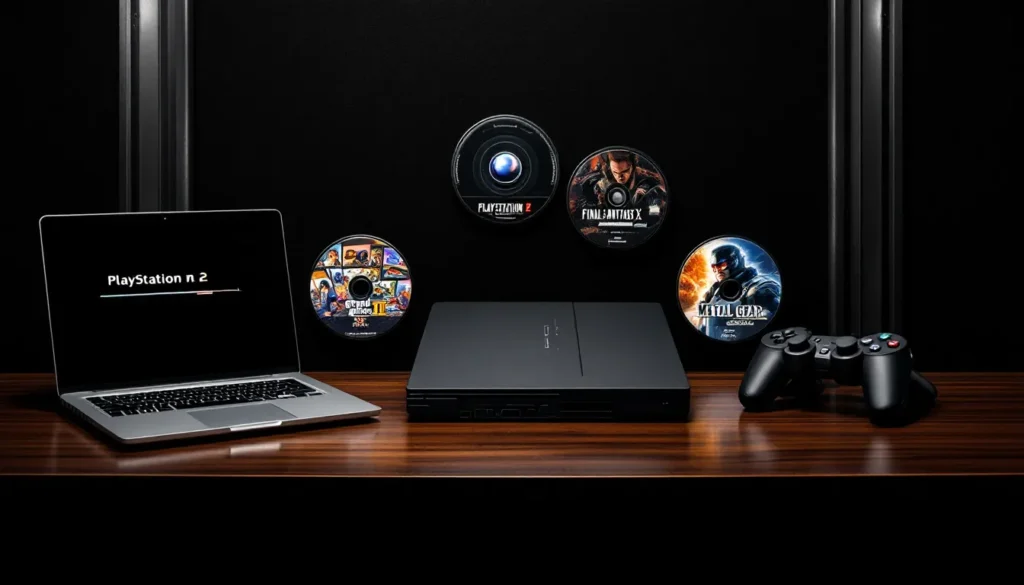
The PlayStation 2 arrived in March 2000 and fundamentally changed what gamers expected from a console. Two decades later, PS2 classic games remain some of the most celebrated and replayed titles in gaming history. Whether you’re hunting for nostalgia or discovering these masterpieces for the first time, the PS2’s library represents an era when game design favored creativity, ambition, and sheer playability over cutting-edge graphics. These aren’t just relics, they’re the blueprint for virtually every major franchise and genre we love today. This guide breaks down the 25 essential PS2 classics worth your time, organized by genre and influence, plus how to actually play them in 2026.
Key Takeaways
- PS2 classic games remain influential masterpieces because they prioritized focused, creative gameplay over cutting-edge graphics, establishing templates that modern gaming still follows.
- Iconic franchises like Grand Theft Auto, Metal Gear Solid, Final Fantasy, and Resident Evil achieved paradigm shifts in their genres on PS2 hardware, from open-world design to narrative-driven gameplay.
- PS2 classic games can be legally played today through original hardware, PlayStation Now streaming, PCSX2 emulation, or backward-compatible PS3 models—each option offers different trade-offs.
- The PS2’s unique cultural position—powerful enough for ambition, affordable for risk-taking, yet dominant without market saturation—enabled both blockbuster and experimental titles to thrive simultaneously.
- Lesser-known PS2 classics like Okami, ICO, Katamari Damacy, and Shadow of the Colossus prove the platform’s library depth extended far beyond franchises, influencing indie developers and game design philosophy for decades.
Why PS2 Remains The Gold Standard For Classic Gaming
The PS2 shipped 155 million units across its lifecycle, making it the second best-selling console ever, only the Nintendo DS outsold it. But raw numbers don’t explain why PS2 classic games still matter. The console hit a sweet spot: powerful enough to render complex 3D worlds, affordable enough that developers took creative risks, and successful enough to attract talent from across the industry.
Developers like Hideo Kojima, Shigeru Miyamoto, and Yoko Taro created some of their finest work on PS2 hardware. The system launched with strong arcade ports, received hundreds of Japanese exclusives, and became the platform where Western studios learned to build open worlds. Games like Grand Theft Auto III proved that massive, interactive environments were possible on home consoles. Final Fantasy X demonstrated that JRPG storytelling could move mainstream audiences to tears. Metal Gear Solid 2 asked uncomfortable questions about narrative control in interactive media.
What sets PS2 classics apart from other retro games is their design philosophy: engaging, focused gameplay without the bloat of modern open-world padding. A PS2 game’s idea was distilled into its core loop. Cutscenes were paced tightly. Levels taught you mechanics through play, not tutorials. That restraint feels refreshing now, when AAA games routinely exceed 100 hours and demand 40GB of storage.
The PS2’s library also benefited from being the dominant console during the industry’s transition from arcade-style action to cinematic storytelling. You get both sensibilities in the same library. A player might spend their morning with the arcade-influenced Devil May Cry 3, then jump into the narrative-heavy Shadow of the Colossus in the afternoon. That versatility, that willingness to publish everything from niche visual novels to blockbuster action games, is why the PS2 ecosystem remains unmatched in breadth and depth.
The Action-Adventure Masterpieces
Action-adventure games defined the PS2’s identity. The genre demanded precise controls, interesting level design, and the kind of pacing that rewards player skill while remaining accessible. PS2 delivered all three, consistently.
Grand Theft Auto Series
Grand Theft Auto III (2001) wasn’t the first open-world game, but it was the first that made the formula feel essential. You play as Claude, a silent protagonist navigating fictional Liberty City. The genius of GTA III lies in its freedom, you can drive anywhere, enter most buildings, and tackle missions in unexpected ways. The wanted level system creates organic tension: you feel hunted without the game railroading you. Vehicle handling is floaty by modern standards, but it has character. You’re driving a 2001-era car, and it feels like it.
Grand Theft Auto: Vice City (2002) refined everything. Set in 1986 Miami, Vice City trades GTA III’s urban grit for pastel neon and Miami Vice aesthetics. The radio stations are impeccable, every song reinforces the era. Tommy Vercetti’s voice acting (Ray Liotta) gives the protagonist actual personality. The mission design is tighter. Vehicle combat feels less janky. Vice City is where GTA became a phenomenon.
Grand Theft Auto: San Andreas (2004) is the most ambitious. Three cities, a 30+ hour campaign, gang territory mechanics, and a protagonist (CJ) whose journey actually matters. Some missions are notoriously frustrating, the infamously tedious “Follow the damn train, CJ” ranking among gaming‘s most memed moments. But the highs are extraordinary. The respect system creates meaningful progression beyond just story beats. Customizing CJ’s appearance, vehicle, and hideout gives ownership. San Andreas occasionally collapses under its own ambition, yet it remains a masterclass in scope for its era.
All three GTA games ran on PS2 first. They’re technically imperfect by 2026 standards, pop-in is aggressive, frame rates dip, and draw distances are short, but they established the template that modern open worlds still follow. Playing them reveals that good game design transcends technical limitations.
Metal Gear Solid Legacy
Metal Gear Solid 2: Sons of Liberty (2001) might be the PS2’s most divisive classic. You expect to play Solid Snake, the franchise hero. Instead, you play as Raiden, a digital soldier, learning the ropes through VR training while the game plays cutscenes and questions what you, the player, actually control in interactive media. It’s pretentious, occasionally frustrating, and absolutely brilliant.
The core stealth gameplay is phenomenal. Snake Eater-style codec conversations let NPCs explain mechanics without slowing the game. Stealth is genuinely challenging, guards are alert, resources are limited, and lethal approaches are tempting but costly. Sound design is exceptional: you hear every footstep, every suppressed gunshot echoes differently depending on location. The game trusts your patience.
Metal Gear Solid 3: Snake Eater (2004) is Metal Gear’s finest moment. Set in the Cold War, you’re Major Naked Snake infiltrating Groznyj Grad. It’s a prequel to the series, so there’s no pretentious meta-narrative, just pure infiltration stealth. The jungle environment is alive. Enemies have personalities. The End, a legendary sniper boss, can be beaten in multiple ways (you can even fight him differently based on in-game time and daylight). The game respects player creativity.
Snake Eater also introduced survival mechanics, you hunt food, manage injuries, even trick guards by using magazines to distract them. It doesn’t feel gimmicky because these systems integrate naturally. You’re surviving in enemy territory, so hunger and injury matter. Modern stealth games owe everything to Metal Gear’s template: detection states, codec communication, guard AI that feels intelligent rather than scripted.
Unmatched RPG Classics You Can’t Miss
The PS2 was the RPG machine. Square Enix, Namco, FromSoftware, Atlus, and Level-5 all released masterpieces on the system. The breadth is staggering, tactical RPGs, dungeon crawlers, traditional JRPGs, action RPGs, visual novels, and experimental hybrids all found audiences.
Final Fantasy And Square Enix Dominance
Final Fantasy X (2001) launched with the PS2 in most regions and remains one of gaming‘s most important RPGs. It’s the first mainline Final Fantasy with voice acting, the last turn-based FF before the series chased real-time combat, and narratively, one of the most ambitious. The story of Tidus, an athlete transported to a world on the brink of apocalypse, sounds generic. But the execution, the character arcs, the twist, the willingness to make you uncomfortable, elevates it.
The turn-based combat system is clean. You see action queues, can swap party members mid-battle, and build diverse loadouts around elemental weaknesses. Sphere Grid progression feels personal: you’re not following a predetermined path. Blitzball (a minigame) could’ve been throwaway content, but it’s deep enough that some players sink 50+ hours into it. The soundtrack, composed by Nobuo Uematsu, is unforgettable. “To Zanarkand” might be the most beautiful video game piano piece ever written.
Final Fantasy VII didn’t release on PS2, but Final Fantasy X-2 (2003) did, and it’s criminally underrated. The direct sequel features multiple job systems, a more frantic real-time combat variant, and a protagonist (Yuna) taking center stage. Critics panned it for tonal whiplash, the game’s J-pop cheerfulness contrasts with X’s melancholy. That contrast is intentional. After losing everything, Yuna is choosing to live and fight rather than accept fate. It’s character development through tone.
Dragon Quest VIII: Journey of the Cursed King (2004 in Japan, 2005 in North America) is a traditional JRPG executed with absolute confidence. You play as the Hero, joined by companions like Yangus and Jessica. The story is straightforward: break a curse, save the kingdom. But Akira Toriyama’s character designs are iconic, the localization is charming without being condescending, and the world design encourages exploration. Grinding is real, you’ll spend hours leveling, but each grinding session feels earned because the game respects your time investment.
Dragon Quest VIII proved that traditional JRPG structures still worked if executed with heart. The game doesn’t innovate mechanically: it perfects fundamentals. Turn-based combat, random encounters, side quests, towns to explore. It’s a blueprint game, and it’s glorious.
Dragon Quest And Japanese RPG Innovation
Persona 4 (2008, though it reached PS2 later regionally) is a social link simulator wrapped inside a detective noir murder mystery. You attend a high school while investigating a serial killer in a small town. During the day, you attend classes, work part-time jobs, and hang out with friends. At night, you dungeon crawl inside a TV set, fighting shadows and uncovering the mystery. The balance between social simulation and dungeon crawling is perfect. You care about the characters because you know them, not because cutscenes force emotional beats.
The turn-based combat uses elemental weaknesses and status effects thoughtfully. Bosses punish button-mashing: you need strategy. The soundtrack pulses with style, every track reinforces mood. The writing is exceptional: characters have distinct voices, and the localization captures personality without breaking immersion.
Disgaea (2003) proved that tactical RPGs could be absurdist comedies without losing mechanical depth. You play as Laharl, a demonic prince, assembling an army of weirdos (a girl who claims to be a fallen angel, a generic fighter with amnesia, a prinny, a exploding penguin-thing). The premise is ridiculous, and the game embraces it. Dialogue is quick-witted. Running jokes spiral into absurdity.
Mechanically, Disgaea layers systems on top of systems: weapon proficiencies, geo panels (tiles that modify terrain), towers of characters, squad attacks. Learning the systems takes time, but experimentation is rewarded. The game is endlessly replayable because difficulty tiers unlock after completing the story. Disgaea’s combination of humor, accessibility, and mechanical depth made tactical RPGs feel fresh.
Fighting And Sports Games That Set The Standard
The PS2 was fighting game central. Tekken, Street Fighter, Soul Calibur, and King of Fighters all released definitive entries on the system. The arcade-to-home transition was seamless: the PS2’s processing power allowed pixel-perfect arcade ports.
Tekken 3 and Tekken 4 brought 3D fighting to mainstream audiences. The learning curve is gentler than Street Fighter: you’ve got eight directional inputs instead of complex motion commands. Character variety is staggering, heavyweight King wrestling opponents, ninja Yoshimitsu, boxer Steve, mechanical Jack. Each character feels fundamentally different. Tournament mode trains you against progressively harder opponents. Time Attack and Survival modes give single-player depth.
Soul Calibur II (2002) is perhaps the best traditional 3D fighting game ever made. Eight-way directional movement creates space for footsies and positioning. Guard impacts let you interrupt opponent attacks if timed perfectly. Characters are wildly distinct: some play completely differently than others. The rock-paper-scissors of fighting game strategy, throw beats grab, grab beats block, block beats throw, feels perfectly balanced.
Soul Calibur II featured platform-exclusive characters (Hwoarang on PS2, Link on GameCube, Spawn on Xbox). This created incentive to play across platforms, though PS2’s Link is visibly lower-quality than the GameCube version. It’s the era’s most famous “pay to lose” moment, yet even Link’s lower poly count can win tournaments in the right hands. That’s how fundamentally sound the game is.
Street Fighter Alpha 3 is a more technical fighter, demanding real execution. Your cancels, combos, and spacing need to be precise. The soul gauge system adds resource management, spending meter on EX moves or defensive options. Training modes teach frame data and combos. Once you understand it, the game opens up. The community remained active on PS2 versions for nearly two decades.
For sports games, NBA 2K3 through NBA 2K6 represent the franchise’s peak on PS2. Realistic player animations, deep franchise modes, and genuinely fun pick-up gameplay. Modern 2K games (2024-2026) focus heavily on monetization, but the PS2 entries were content-rich without aggressive monetization. You could build a franchise from the ground up without spending a dime.
Pro Evolution Soccer 2008 (also called Winning Eleven in Japan) was the FIFA alternative that sometimes surpassed EA’s offering. Master League (franchise mode) was addictive, scouting young talents, developing them, building a dynasty. Match engine was responsive and tactical. The international community remained engaged long after the servers shut down.
The Survival Horror Revolution
Survival horror as a genre was perfected on PS2. Resident Evil and Silent Hill dominated, but lesser-known franchises like Siren, Haunting Ground, and Clock Tower also pushed boundaries.
Resident Evil And Silent Hill Dominance
Resident Evil 4 (2005, originally exclusive to GameCube) came to PS2 and revolutionized third-person action games. The over-the-shoulder camera became industry standard. Quick-time events (QTE), once despised, became essential for cinematic moments. The game iterates on RE mechanics, resource management, puzzle solving, but speeds everything up. Combat feels responsive: you can aim while moving (barely), dodge-roll away from attacks, and chain kills together.
RE4’s pacing is exceptional. The difficulty curve escalates gradually. New enemy types keep encounters fresh. The story, though ridiculous (a president’s daughter, supernatural parasites, Las Plagas), is told with such earnestness that you buy it. The castle section, the island base, each environment has distinct flavor. Fans were skeptical when Capcom moved away from fixed cameras, but RE4 proved that survival horror could evolve.
Resident Evil 5 (2009) refined RE4’s formula. Dual-wielding weapons, new zombie types, co-op play (split-screen locally, online remotely). The game is longer, more action-focused, and occasionally tone-deaf in its African setting and enemy design. But mechanically, it’s excellent. Mercenaries mode (survive waves of enemies for score) became the franchise’s most replayable content.
Silent Hill 2 (2001) remains gaming’s most psychologically disturbing horror game, even now. You play as James Sunderland, searching for his dead wife in the fog-shrouded town of Silent Hill. Environments shift between normal and hellish. Combat is intentionally clunky, you’re a regular person, not a soldier. Enemies are grotesque but have symbolic meaning. The game doesn’t explain the symbolism: it trusts players to figure it out.
The radio static increases as monsters approach. Footsteps echo differently on metal versus concrete. The fog itself is oppressive. Silent Hill 2 uses its technology to create dread, not just scares. Endings shift based on actions throughout the game. An extremely aggressive playthrough leads to different conclusions than a mercy-focused playthrough. Replaying to discover alternate endings rewards patient observation.
Silent Hill 3 (2003) continued the series’ momentum. Direct sequel to SH1, it features Heather, a young woman defending herself against a cult. Combat is improved over SH2. The environment feels more realized. Monsters are more varied. It’s slightly more action-focused than SH2, which some view as a step down and others consider a necessary evolution. Both are masterpieces.
Siren (2003 in Japan, 2004 in North America) is an underrated gem. You’re trapped in a town where everyone has been “sired”, transformed into shambling, violent creatures. You cannot fight directly: stealth is mandatory. The unique sightjacking mechanic lets you see through enemies’ eyes, revealing patrol patterns and layout. Puzzle solving is environmental: you’re escaping from controlled encounters rather than combat scenario.
The game’s atmosphere is relentless. It gets darker, both literally and tonally. The localization features unreliable narration, characters are disoriented, traumatized, sometimes unreliable reporters. You piece together what’s happening through fragments. Siren is more experimental than RE or SH, and it respects player intelligence enough not to explain everything.
These games established the template that survival horror followed for decades. They weren’t just scary: they were mechanically inventive and narratively ambitious.
Hidden Gems And Cult Classics Worth Rediscovering
Beyond the blockbusters, PS2’s library is stuffed with lesser-known masterpieces. Developers took risks on niche concepts, experimental mechanics, and unique aesthetics because the install base was large enough to support variety.
Indie And Lesser-Known Masterpieces
Okami (2006) is a Zelda-like action game with a revolutionary mechanic: you’re a white wolf goddess, and you paint the world into existence. Combat is standard button-mashing, but the celestial brush, which pauses gameplay and lets you draw, is the star. Draw a circle to create bombs, draw a line to slash enemies, draw a spiral to heal. The brush adds a creative layer to combat that feels unique even now.
The art direction mimics watercolor paintings. Characters are expressive. The story, adapted from Japanese mythology, is quirky and surprisingly deep. Side quests are charming, not mandatory padding. Okami proves that great art direction can be as memorable as cutting-edge graphics.
ICO (2001) is a minimalist puzzle platformer. You’re a boy with horns, escaping a castle with a mysterious girl. The girl can’t fight or solve puzzles: you must protect her while progressing. Instead of combat, you’re evading armed guards, which means hiding or running rather than fighting. The relationship between Ico and Yorda develops through gameplay, not cutscenes. You feel responsible for her safety because the mechanic enforces it.
The castle is vast and lonely. There’s almost no music, just ambient sound. Cutscenes are sparse. Environmental storytelling suggests deeper lore without explaining. ICO influenced a generation of indie developers creating emotional experiences through mechanics rather than narrative exposition.
Shadow of the Colossus (2005) is a boss-gauntlet game where you hunt 16 massive creatures called colossi. Each colossus is a puzzle: figuring out weak points and climbing to reach them is the game. Combat is minimal: you’re a tiny human with a sword fighting building-sized enemies. The camera pulls back to show scale, making you feel insignificant.
The world is vast, mostly empty desert. Narrative is minimal. Hints appear as you examine your hands and watch for sigils. Some players found the emptiness tedious: others found it meditative. The game trusts silence and space to create mood. Shadow of the Colossus proved that games don’t need constant action to be engaging.
Katamari Damacy (2004 in Japan, 2005 in North America) is pure joy. You roll a magical ball around Japan, collecting objects. Small objects (flowers, toys) stick to your ball, making it larger. As you grow, bigger objects (cows, cars, people) become collectible. The goal is reaching a target size. It’s absurd, colorful, and completely addictive.
The game has no combat, complex puzzles, or deep story. It’s pure mechanical joy, watching your ball grow, discovering new areas, realizing you can now collect what you couldn’t before. The soundtrack is bouncy and Japanese pop-influenced. Playing Katamari is like eating candy: it’s unhealthy in doses but impossible to stop once you start.
Chrono Cross (1999, direct sequel to the SNES’s Chrono Trigger) features 45 recruitable characters, parallel worlds, and time-travel politics. It’s divisive because it retcons Chrono Trigger’s ending. But mechanically, it’s exceptional. The elemental grid system replaces traditional MP: you allocate elemental points to allies for damage and support. Character positioning matters. Random encounters don’t exist: enemies are visible on-field, letting you avoid them.
The game is visually gorgeous by PS1/PS2 standards, pre-rendered backgrounds and detailed sprites. The soundtrack is phenomenal. Some criticize the bloated roster and convoluted story. But the game’s ambition is undeniable. Chrono Cross tried to do everything, and while it stumbled occasionally, the highs remain exceptional.
Eternal Darkness: Sanity’s Requiem (2002) is a psychological horror game that plays with player perception. As your character’s sanity decreases, the game glitches. Screen rotates 90 degrees. Volume drops to mute. The game fakes a “save file corruption” screen. These aren’t bugs: they’re the game messing with you. It’s the most creative use of unreliable game states ever attempted.
The story spans centuries, following different characters haunted by ancient evils. Gameplay alternates between action and exploration. The combat, though not exceptional, suits the survival horror vibe. The real star is the sanity mechanic, by game’s end, you’re as paranoid as the protagonist, unsure what’s real.
Rule of Rose (2006) is a haunted book adventure game that’s as disturbing as they come. It’s narrative-heavy, mechanically simple, and deeply unsettling. A girl discovers a book that controls reality. The game explores themes of abuse, bullying, and control through surreal imagery. It’s less “video game” and more “interactive horror experience.” Not everyone will enjoy it, but those who do consider it unforgettable.
Numerically, these games sold millions fewer copies than Grand Theft Auto. Culturally, they’ve influenced indie developers, artists, and designers as profoundly as any blockbuster. The PS2 platform gave developers room to experiment, and the best experiments became classics.
How To Play PS2 Classics Today
PS2 games aren’t as accessible as modern titles. The console is over 20 years old. Hardware fails, discs degrade, and living room setups change. But several legal options exist.
Emulation And Preservation Options
Original Hardware remains the purest option. A refurbished PS2 (either the original fat model or the slimmer Network Adapter-equipped model) costs $100-$200 on secondhand markets. Component cables improve video quality significantly. Games are still findable on eBay, retro shops, or directly from sellers. This method requires effort and money, but you’re playing the actual games as intended.
PlayStation Network (PS Now) streams certain PS2 games to PS5, PS4, and PC. The library rotates, but major titles (Grand Theft Auto, Metal Gear Solid, Final Fantasy X) are usually available. Streaming introduces latency, which is noticeable in action games. Turn-based RPGs are easier to play via streaming. It’s the most legally straightforward option and requires zero setup beyond a subscription.
PS2 Emulation is legal for personal backups of games you own. PCSX2 (the most popular PS2 emulator) runs on Windows, Linux, and Mac. The emulator is free and open-source. Setup is moderately technical, configuring graphics plugins, input devices, and game-specific settings takes effort. But once configured, you can play at higher resolutions, run completed games without load times, and customize graphics beyond original specifications. Performance varies: demanding games like Grand Theft Auto: San Andreas run at 30 FPS even on strong PCs, while simpler titles hit 60 FPS easily.
Emulation is ethically grounded in preservation, archivists argue that aging hardware will eventually fail, rendering games inaccessible. Legally, emulation exists in a gray area. Playing backed-up copies you own is defensible: downloading ROMs from emulation sites isn’t.
Backwards Compatibility varies by region. The PS3 (20GB and 60GB fat models) could play PS2 games physically via hardware backwards compatibility. This method requires finding a used PS3 and PS2 copies, but it provides authentic performance without setup complexity. PS3 eventually stopped supporting PS2 games in system updates, but previously-downloaded firmware can be restored.
For those unwilling or unable to pursue emulation or original hardware, classic horror games and various retro titles are sometimes re-released on modern platforms, though licensing issues mean many PS2 classics will never get official ports. Final Fantasy X and X-2 received PC and Switch ports. Grand Theft Auto: The Trilogy got a (controversial) remaster. But most hidden gems remain accessible only via original hardware or emulation.
The Legacy Continues: Why These Games Still Matter
In 2026, we’re 15+ years removed from the PS2’s final games. Modern consoles are exponentially more powerful. Yet PS2 classic games remain culturally relevant because they solved fundamental design problems that contemporary games still grapple with.
Modern AAA development has become risk-averse. Publishers greenlight sequels and established franchises. Independent developers innovate, but with smaller budgets. The PS2 era had both: blockbuster-sized budgets for experimental concepts. That combination doesn’t exist anymore in the same way. Rockstar doesn’t make an open-world game about a tennis player (Top Spin) anymore. Square Enix doesn’t greenlight a visual novel dating sim (Persona) without existing IP recognition. Level-5 didn’t get to make weird tactical RPGs (Disgaea) with AAA production values.
PS2 games also represent pre-streaming, pre-social media gaming. Game design didn’t need to account for Twitch highlights or YouTube compilations. Cutscenes weren’t designed to become memes. Difficulty wasn’t balanced around viewer engagement metrics. Games were made to be played, not consumed passively. That’s why picking up a PS2 game today feels different, you’re engaging with design philosophy from an earlier era.
Modern developers cite PS2 classics constantly. Software houses like Fromsoft (Dark Souls, Elden Ring) point to Armored Core’s PS2 entries as template. Remedy Entertainment’s Max Payne inspired third-person shooters, but the formula was perfected through PS2 refinements (Gears of War, which came later, but built on RE4’s PS2 success). Even indie games cite Metal Gear Solid’s design decisions or ICO’s emotional mechanics as inspiration.
From preservation perspective, PS2 games matter because they’re slipping away. Original disc readers fail. Servers shutdown (online multiplayer in PS2 games is nearly impossible unless you’re using private servers). Physical copies appreciate in value but remain at risk of degradation. Emulation ensures these games can be played 50 years from now. Legal or not, emulation is a form of cultural preservation that museums and archives increasingly recognize as necessary.
Practically, PS2 classic games offer value. A $5-$10 used copy or a $15/month PlayStation Now subscription gets you 100+ hours of gameplay. Modern $70 games often feel like they’re demanding your time as a monetization strategy. PS2 games demand your attention because the design is compelling, not because skinner-box mechanics keep you grinding.
For players who grew up on PS2, replaying these classics is revisiting a formative era. For newcomers, the games reveal what gaming was before battle passes, microtransactions, and engagement metrics. That contrast is valuable, not because old games were automatically better, but because understanding different design philosophies makes you a more thoughtful player.
The PS2 library also represents genuine innovation compressed into a seven-year window (roughly 2000-2007 for major releases). Grand Theft Auto III changed open-world design. Final Fantasy X changed how JRPGs approached narrative. Metal Gear Solid changed stealth game conventions. Resident Evil 4 changed third-person cameras. These weren’t incremental improvements: they were paradigm shifts. Playing the games that caused those shifts feels essential for anyone serious about understanding video game design.
In 20 more years, will PS5 games feel as essential as PS2 classics do now? Possibly not. The PS2’s sweet spot, technical power without crushing development costs, install base without market saturation, cultural relevance without social media amplification, is unlikely to align the same way again. That makes PS2 classics historically unique. They’re not just good games: they’re artifacts of a specific moment in gaming’s evolution.
Conclusion
The PS2 isn’t the “best” console ever made, though the argument is defensible. But it’s the most important. More developers worked on it. More genres found definitive entries on its hardware. More future classics were influenced by its library. Spike Lee directed a Super Bowl commercial about it. It wasn’t just a gaming device: it was cultural infrastructure.
In 2026, the console’s legacy is secure. Streamers replay its classics on Twitch. Speedrunners optimize its games. Emulation communities preserve its catalog. Academic papers cite its design philosophy. Universities teach game design using its masterpieces as case studies. This isn’t nostalgia inflating its importance, it’s recognition that the PS2 released an unprecedented concentration of exceptional games.
Start with one of these 25 titles. Grand Theft Auto III if you want open-world foundation. Final Fantasy X if you want JRPG tradition. Metal Gear Solid 3 if you want stealth perfection. Katamari Damacy if you want pure joy. Each game is still excellent, still worth your time, still capable of teaching you something about game design.
The PS2 era is gone. Developers who made these games are retired, moved on, or unfortunately passed. But the games remain. In basements, on eBay, on emulation sites, on PlayStation Now. They’re waiting, as patient as ever, for you to experience what millions did 20+ years ago. The magic hasn’t worn off.